This tax will come into force on January 1st. The mechanism aims to subject products imported into the European Union to carbon pricing equivalent to that applied to the European manufacturers who manufacture them. Nitrogen fertilizers will therefore be affected, hence the anger of cereal growers.
:quality(50)/2023/07/07/64a7df4c5fe71_placeholder-36b69ec8.png)
Published
Reading time: 2min
:quality(50)/2025/11/01/000-34z89ze-690640a9ee167789188171.jpg)
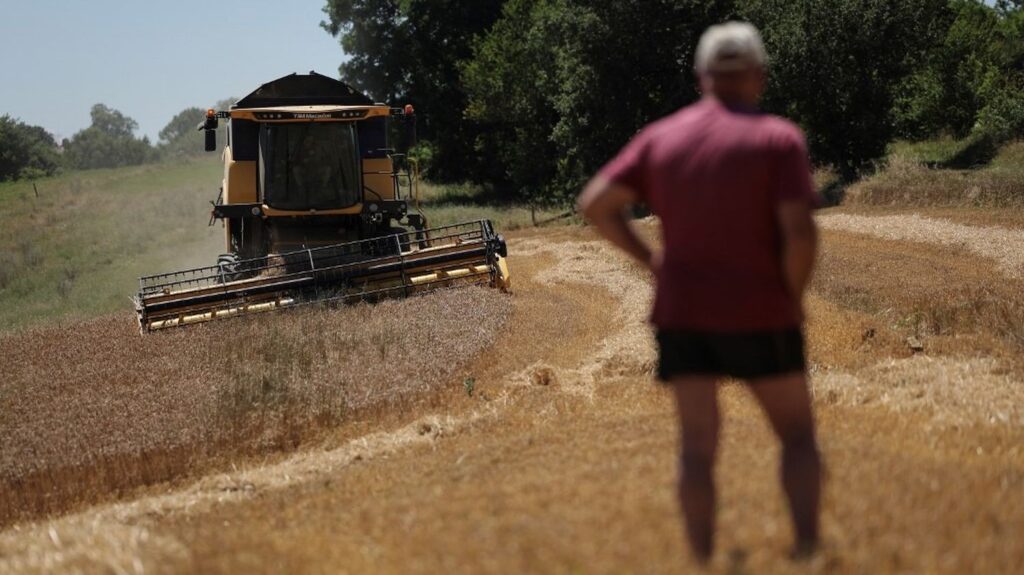
Anger is brewing among French cereal growers. The FNSEA, the leading agricultural union, denounces the carbon tax at the borders of the European Union which will come into force on January 1, 2026. This mechanism, which aims to subject products imported into the EU to carbon pricing equivalent to that applied to European manufacturers manufacturing these products, will include nitrogen fertilizers made from natural gas, widely consumed by cereal growers. French farmers are therefore asking Brussels to review its copy because they believe that they will not be able to support such a tax.
France actually imports more than half of the fertilizers it uses from countries outside the European Union. Our farmers are therefore dependent and the amount of the tax would be far too high, according to the calculation of the general association of wheat producers. “We are talking about 140 euros per tonne for example for a fertilizer called urea, which contains 46% ammoniacal nitrogen, it is completely unbearable for farmers”explains Cédric Benoist, deputy secretary general of this association which depends on the FNSEA and himself a cereal grower in the Loiret.
For his 160 hectare farm, this would cost him 15,000 euros per year, or a third of his profit, and this, in an unfavorable context since world wheat prices are at their lowest and have already not covered production costs for three years. Most treasuries are in the red.
“We had already been experiencing a delicate situation for six months with fairly fragile farms throughout France.”
Cedric Benoistat franceinfo
“There, the colleagues who call me ask me what this thing is that still falls on the corner of our face”deplores Cédric Benoist. The price of fertilizers is in fact already increasing since European surcharges on imports from Russia, as part of sanctions linked to the war in Ukraine.