Published
Updated
Reading time: 3min – video: 3min
:quality(50)/2025/11/04/video-66-690a1bae16f18124744946.jpg)
3 minutes
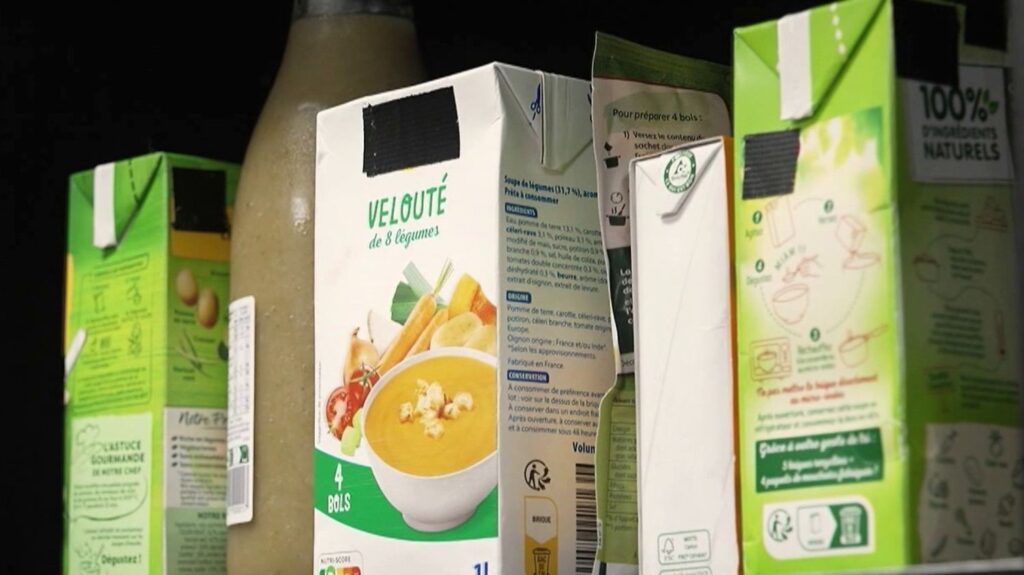
One in two soups consumed in France comes from a carton or a sachet. But what do they really contain, what are the differences with those we make at home?
This text corresponds to part of the transcription of the report above. Click on the video to watch it in full.
In winter, it is the star of our cupboards. Quick to prepare, creamy, the industrial soup has won the hearts of the French, who consume 13 liters of it per year. “I take it from time to time because it’s not too expensive, it’s quick to make and it fills well”confides a passerby. Practical, affordable, but when it comes to taste, some people don’t take the easy way out. “When you make your own soup, it also has flavor and I think there is less junk in it”believes a woman.
The industrial soup market represents 350 million euros in turnover. On the shelves, it is difficult to make a choice. How are these soups made? Are they really nutritious? The France Télévisions teams looked behind our labels.
Patrick Battendier opened the doors of his fresh soup factory to us. Nearly 160 recipes are developed there by chefs. “We’re cooking. We’re going to use the percentage of vegetables, the maximum we can use”assures Patrick Battendier, general director of the Giraudet company. That day, it’s chestnut soup. The recipe is simple: butter, onions, chestnuts and milk, without forgetting the spices. “All recipes are tasted before being packaged, obviously”indicates the director.
Stored in glass bottles, they are simply pasteurized, that is, heated to 80 degrees for 20 minutes. “We damage the product less, in fact, we raise the temperature much less”explains Patrick Battendier. The company produces 400 tonnes of soups per year. But premium soups come at a cost. On average, 6 euros per liter, compared to 2 euros for their brick equivalent.
Dehydrated, canned or fresh, do brick soups have the same nutritional value? How to choose them? A nutritionist indicates the procedure to follow. “What I’m going to look at are the nutritional values. First, the salt content. On a brick, for 100 grams, we have 0.67 grams of salt. It’s a little high. The best is to be below 0.5. But honestly, it’s quite rare for industrial soups”explains Jiliane Cleyet-Merle, dietitian nutritionist in Lyon (Rhône).
Also pay attention to the ingredients. To thicken the soup, manufacturers add potato or starch. You must therefore choose one with a high vegetable content. And the one that contains the most vitamins remains fresh soup. “Sterilized soups are mixed and heated very quickly. So, the vitamin content will evaporate much more quickly too. Whereas with fresh soups, we manage to keep something a little more interesting”continues the dietician.
Despite their practicality, industrial soups are not worth a homemade soup, with a higher content of fresh vegetables. To your mixers.