/2025/11/06/bgbdgbf-690c5d95d9dde572796844.jpg)
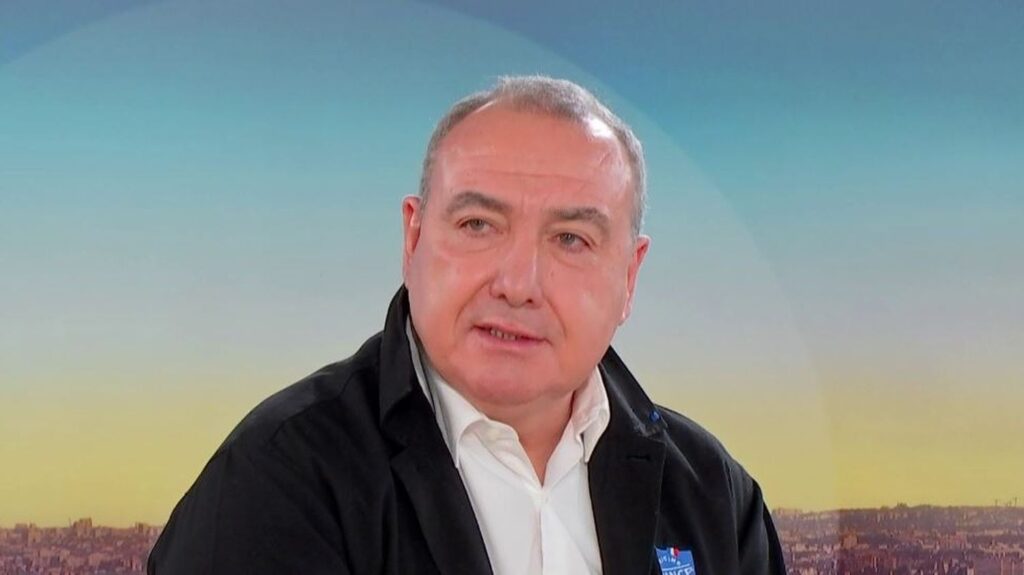
Thomas Snégaroff, accompanied by Baptiste Morin, receives Gilles Attaf, president of Origine France Garantie certification, in the France Info Matinale on Thursday November 6. They discuss Made in France, competitiveness issues, industrial sovereignty and ways to raise consumer awareness of the importance of buying local.
This text corresponds to the transcription of part of the interview above. Click on the video to watch the interview in full.
Thomas Snégaroff: Unfortunately, we see that the situation remains very difficult, as the example of Shein shows. Consumers are faced with low-priced, trendy products, now available in department stores in the heart of Paris. So it becomes very difficult to compete.
Gilles Attaf: Yes, the competition is difficult, but it is important to overcome certain clichés. There is Made in France that is perfectly accessible. We have all understood that it is necessary to consume less, but better, by favoring quality products, made locally. This is a major issue, which requires thinking in the long term.
We also need to educate consumers: for example, explain to them that a Shein product does not participate in the French social model and does not contribute to pensions. It is a subject of civic and social conscience. It is crucial to raise awareness among consumers so that they think about the impact of their choices. In the future, when some people can no longer afford products like those from Shein, what will we do?
Today, the challenge is to revive French industry and improve its competitiveness: increase volumes, scale up again. We have concrete examples: some of our Origine France Garantie members sell toothbrushes for less than one euro or phone chargers at the same price as Chinese products. It is therefore still possible to be competitive.
Thomas Snégaroff: You were talking about educating the French and raising their awareness. Concretely, what should we tell them? Should we return to the slogan according to which the bank card is a weapon today?
Gilles Attaf: Exactly. You can “vote” with your bank card. For example, at the Made in France Show, which brings together a thousand exhibitors, buying a product made in France is an act that has a real impact. Producing locally also means supporting our territories and our society.
It is a militant act, certainly, but also an emotional act. Take the example of Duralex: there is pride in supporting a French brand, an emotional attachment. That said, the road remains long. We need to rediscover a culture of products made in France.
We were told, fifty years ago, that the workshop of the world would be in China and that France would become a country of services. In reality, we have not fully succeeded in becoming a tertiary country and have deindustrialized. The social and territorial problems that we experience today, in particular the “diagonal of the void”, are directly linked to this deindustrialization. Consuming and producing in France also means moving up the industrial scale.
Thomas Snégaroff: Are there sectors where Made in France is well established, and others where the situation is more complex?
Baptiste Morin: Yes, certain sectors are more anchored in Made in France. According to INSEE, 50% of the energy consumed in France is produced locally, and 58% of agricultural products are also produced locally, although this proportion is tending to decrease. This is a subject that farmers raise regularly.
On the other hand, for clothing, the situation is very different: only 3% of clothing consumed in France is made locally. In a context of inflation and constrained purchasing power, is it relevant to revive national textile production?
Gilles Attaf: Sovereignty is a key issue, whatever the sector. In textiles, for example, the pandemic showed that the sector could become strategic when there was a need to manufacture fabric masks.
Sovereignty is not synonymous with protectionism: it is about preserving a country’s ability to make its own choices. Importing is very expensive, not only in environmental terms, but also in social terms, because it leads to unemployment in France. This is the real issue.
Thomas Snégaroff: When we compare clothing made in Bangladesh, where a suit is made for one euro per hour, to France, where the hourly cost is 32 euros, the difference is glaring, even taking into account social charges and the social model.
Baptiste Morin: Portugal has established itself as a true workshop of Europe. Buying Made in Europe is already an important first step.
Gilles Attaf: In Europe, we share similar social, environmental and ecological standards, which is not the case in Asia. Unfair competition makes the battle complicated, because we are not playing on equal terms. This is why the question of Made in France is a real societal choice.
This text corresponds to the transcription of part of the interview above. Click on the video to watch the interview in full.