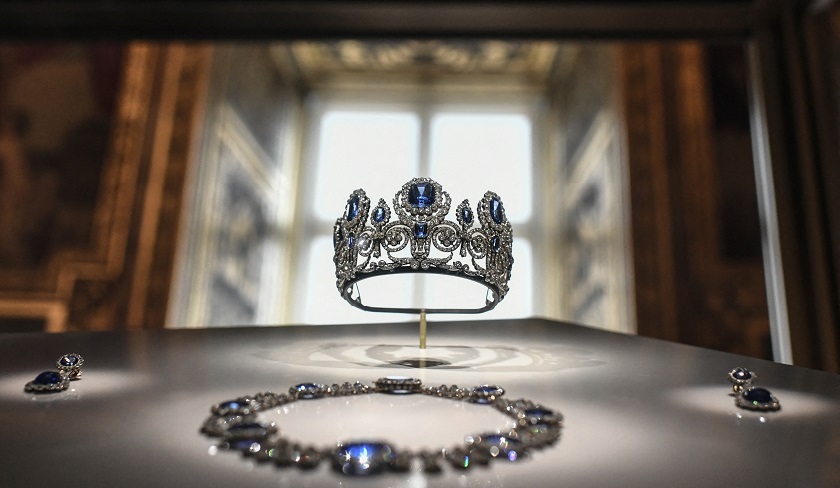
Three weeks after the resounding theft of national jewels from the Louvre, the Court of Auditors strongly criticized the large Parisian museum on Thursday in a report, estimating that it had “favored visible and attractive operations” to the detriment of security.
« The theft of the Crown Jewels is undoubtedly a deafening wake-up call », declared the first president of the Court of Auditors, Pierre Moscovici.
On October 19, criminals managed to break into the museum and steal jewels worth 88 million euros. The jewelry remains untraceable and four suspects were indicted and imprisoned.
“A deafening alarm signal”
The report from the Court of Auditors, relating to the management of the museum between 2018 and 2024, estimates that its management “ favored visible and attractive operations to the detriment of the maintenance and renovation of buildings and technical installations, particularly safety and security ».
The Court points to “a considerable delay in the pace of investments” in the face of an “accelerated deterioration” of the museum, which welcomed nearly nine million visitors in 2024.
She is also alarmed by “ persistent delay in the deployment of security equipment for the protection of works “. These investments are yet essential to ensure the long-term functioning of the institution », underline the Sages.
« The priority of priorities today must be the renovation of the museum, the modernization of its infrastructure in terms of fire, in terms of security, in terms of security (…). The Louvre deserves this », Estimated Mr. Moscovici, referring to a security audit carried out between 2015 and 2017 which had revealed “flaws” without being followed up.
These recommendations echo the administrative investigation opened after the heist, which revealed a “chronic underestimation” of the risk of intrusion at the Louvre.
“A lack of prioritization” of priorities
The report also estimates that the museum, “ by failing to prioritize its numerous projects, is faced with a wall of investments that it is not able to finance ”, and this “ despite abundant resources ».
Between 2018 and 2024, the Louvre has thus set aside 26.7 million euros for maintenance and upgrading work, compared to 105.4 million euros for the acquisition of works, specifies the Court.
More generally, the museum must now move from a “ attendance experienced at a chosen attendance ». « The objective for the establishment is no longer so much to increase the number of visitors as to ensure that they improve their visiting conditions. “, summed up M. Moscovici.
In her response, the Minister of Culture Rachida Dati said “join” the observation “ on the urgency of technical work”, while defending the acquisition policy of the Louvre in the name of “the enrichment of national collections ».
The museum management says it accepts “ most recommendations » of the Court, while considering that the report “misunderstands” several of its actions, particularly on security. “ The management of the largest and most visited museum in the world can only be the subject of a balanced judgment if it is based on the long term. », argued the Louvre.
Concerns over the financing of the “New Renaissance” project
The establishment also considers that the Court has exceeded its study period (2018-2024) by evoking the vast renovation project of the museum called “Louvre, New Renaissance”, presented in January by Emmanuel Macron.
The Court revised its cost upwards, to 1.15 billion euros, compared to 700 to 800 million mentioned by the entourage of the Head of State.
« At this stage, this project is not funded and must be so as not to expose the establishment, and therefore the State, to uncontrolled financial commitments. », to have you M. Moscovici.
« Its financing plan must be serious and credible, sustainable and secure “, agreed Ms. Dati in her response.
Under pressure since the heist of October 19, the president and director of the Louvre, Laurence des Cars, in office since September 2021, convened an emergency board of directors on Friday to review its governance.
© Agence France-Presse