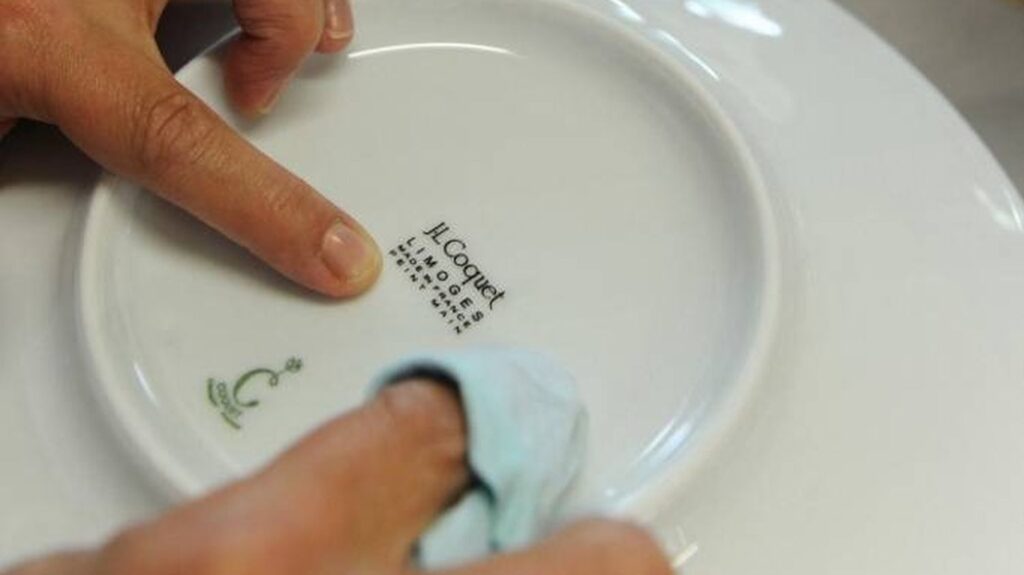
Under a law adopted in 2023, artisanal know-how, such as famous porcelain, will be highlighted thanks to the Geographical Indication label. But you have to apply.
:quality(50)/2024/03/04/emmanuel-cugny-65e6021ef3340792811771.png)
Published
Reading time: 3min
:quality(50)/2025/12/02/000-par7607201-1-692e8e2877617247871062.jpg)
From champagne to Parma ham, Brussels already protected food products under this designation. Europe will now do this for artisanal goods and know-how, and the famous Limoges porcelain intends to be a pioneer with the first application filed. Thanks to a law adopted in 2023, artisans such as glass blowers, potters, cutlers or jewelers can register since Monday 1East December the name of their products in this system of recognition of local products.
This extension of Geographical Indication (GI) Labels has been requested for several years by artisans. It exists in France but not at European level. This is therefore evolving, with the aim of fighting against counterfeit products and, above all, supporting the sectors concerned in the face of industry and imports of low-cost items, generally of poor quality, from abroad, including Asia. For 30 years, only one law has existed defending agricultural geographical indications. Nearly 4,000 names generating nearly 75 billion euros in annual turnover represent 15% of European exports of food and drinks.
Physical items are now concerned but nothing is gained because artisans must apply, to hope to be able to have the precious label, a complete file must be submitted to the European Commission. If this is accepted by Brussels, the products in question will benefit from industrial property rights. Concretely for Limoges porcelain, this means that, wherever it is sold in European countries, customers will have the assurance of purchasing items produced in Haute-Vienne.
On a commercial level, this is far from negligible. Artisans rely heavily on this European recognition of Geographical Indication because, at a time of all-out globalization, more and more customers are looking for authentic products. The label extended by Europe will help safeguard skills and artisanal traditions but also create new growth opportunities. By linking recognition of the quality, reputation and characteristics of a product to its place of origin and manufacturing, the Geographical Indication label also aims to defend regional employment areas. With their businesses and artisans, local communities are also very attached to it.