Published
Reading time: 2min – video: 3min
:quality(50)/2025/12/02/jnjnjnj-692eff786b238230845347.jpg)
3 minutes
Used cars attract many buyers, but some hide pitfalls. Mileage fraud, unforeseen breakdowns or falsified documents: these scams remain common and can turn a good deal into a real nightmare.
This text corresponds to part of the transcription of the report above. Click on the video to watch it in full.
This car was the perfect opportunity for them. Last year, the couple bought a second-hand station wagon from a garage that had just opened in the Paris region. He only paid 13,500 euros for it. Officially, it was worth 15,000. But very quickly, it was a cold shower.“We drove it for 3 weeks, until it broke down overnight on the highway. So we had to bring the vehicle back by a tow truck, and it never got started again,” explains Orlane Couvreur, victim of the scam.
The garage closed the day after their purchase. After having the car appraised, they realize that they have been scammed. Benjamin Florek says: “It officially had 189,000 km when the garage sold it to us. And on the history that we had done, the latest mileage history shows 311,000 km in 2021.”
However, after three weeks of use, the odometer showed only 192,000 km. It was tampered with, a common scam in the used vehicle market.
The fewer kilometers a car has on the odometer, the more expensive it is. In France, specialized sites estimate that this type of fraud concerns between 2.5 and 8% of used cars appraised each year. A scam that is all the more common as it is easy to obtain the necessary tool on the internet. A simple box sold for around a hundred euros allows you to change the mileage displayed.
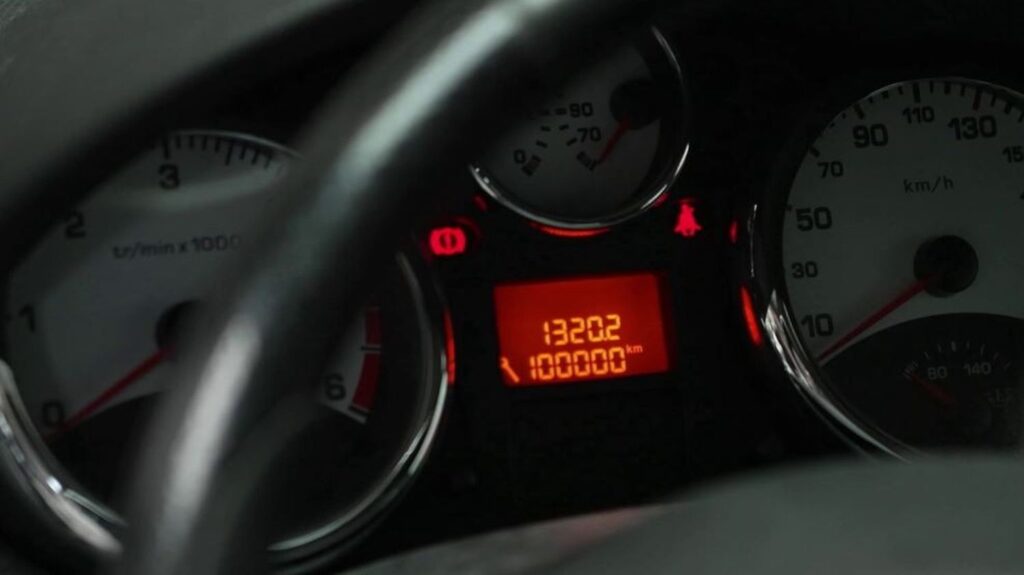
For the purposes of our report, Corentin Joubert, co-manager of the Aurel Automobile garage, demonstrates it to us: Simply enter the desired mileage in the software interface, wait a few minutes and presto, the meter only displays 100,000 kilometers. “To do this kind of intervention, in 10 minutes, you are able to do that. It’s very intuitive.” underlines Corentin Joubert.
So, how can you avoid being fooled? You must ask the seller for as many documents as possible on the vehicle’s history, technical inspections, maintenance invoices to check whether its evolution is consistent. You also need to check the condition of the car. Moundyr Gainou, France director of carVertical, gives some tips: “When we look at the interior of the vehicle, depending on the vehicle, for example, what we are going to look at initially is going to be wear: wear on the seats, wear on the steering wheel, wear on the pedals.”
The state also offers HistoVec, a free site that allows you to get a first look at the vehicle’s history.