/2025/12/02/dbdhnvbdhb-692f4f7dea872460312179.jpg)
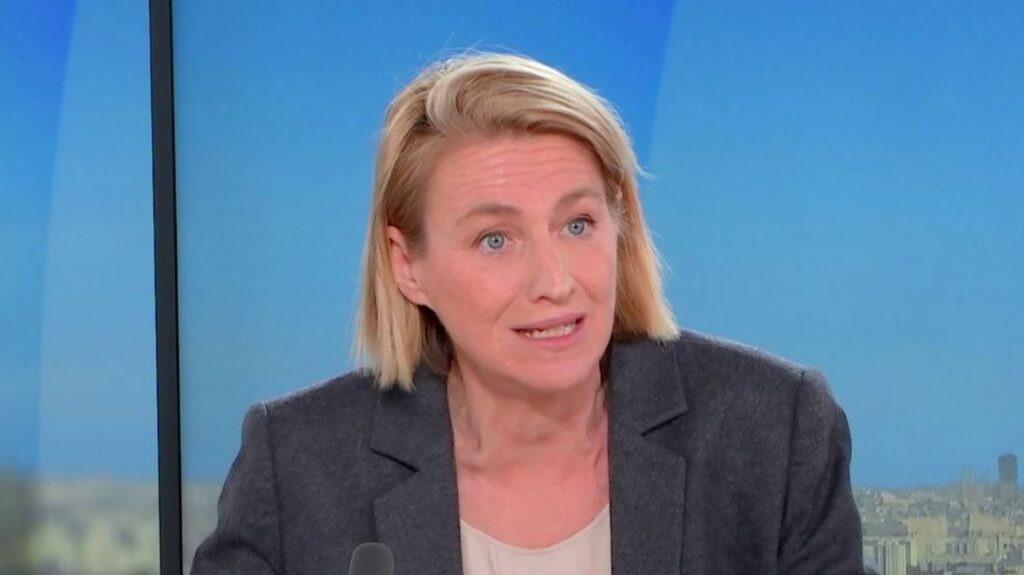
Tuesday, December 2 Astrid Panosyan-Bouvet, former Minister of Labor and Employment, shares her analysis on current work issues in France, from employee discomfort to pension reform, emphasizing the importance of social dialogue and listening within companies.
This text corresponds to part of the transcription of the interview above. Click on the video to watch it in full.
Sonia Chironi Former Minister of Labor and Employment in the governments of Michel Barnier then François Bayrou, you also advised Emmanuel Macron on issues related to work and health. You are therefore particularly well informed on these subjects. Today, 49% of French people say they feel anxiety at work, a figure significantly higher than the European average, which stands at 30%.
Astrid Panosian-Bouvet: I fully share the conclusions that have been presented here concerning the specificity of French managerial practices. This study, carried out last year when I was Minister of Labor, highlights a verticality of practices, an insufficient feeling of being listened to, a lack of capacity to act and an intensification of work rhythms, a phenomenon which was accentuated with the implementation of the 35-hour week. All these factors contribute to generating stress, as the significant differences between France, Germany and the European Union average clearly show.
These findings underline the importance of putting the question of work organization at the heart of social dialogue. It is also a question of considering other forms of dialogue, such as professional listening and local listening. On this point, parliamentarians, of which I am one, have asked the social partners to work more on these measures.
Nathalie Saint-Cricq: What do you mean by “proximity listening”?
Local listening consists of establishing a dialogue within teams, at the workshop or office level, outside of the company’s formal social bodies.
Should this practice be formalized? Some companies already believe they have too many obligations.
In other countries, this listening is not formalized, because the managerial culture is different. A good manager is not only responsible for giving orders or controlling; it involves the teams while respecting the hierarchy. It is therefore simply a matter of giving advice to managers to better manage their teams and strengthen collective efficiency.
Other studies also confirm that French workers suffer from a lack of recognition, feel insufficiently listened to and perceive a loss of meaning in their work, which impacts their commitment and motivation.
In your opinion, does this unhappiness at work explain the difficulty in finding a compromise on the pension issue?
I think that the perception of pensions as “delayed happiness” after a life of work makes dialogue difficult. It is essential to talk about work in its entirety: salaries, conditions, recognition and perspectives. These aspects are too little addressed today, unlike employment, which has ceased to be a major concern for our fellow citizens in recent years. However, work and employment are two distinct realities. Work creates social bonds and a subjective reality that must be improved for our fellow citizens.
You voted against the suspension of the pension reform. Is it because you consider it a good reform?
I see no alternative in the face of the demographic wall and the financial trajectory that we are reminded of by various institutes, notably the Court of Auditors. The question of the employment rate of seniors is also crucial: only 40% of those over 60 work in France, compared to 70% in Northern European countries. Today, 28% of workers’ salaries are used to finance pensions, without workers having the feeling of fully benefiting from them in turn.
It is therefore necessary to consider measures linked to the retirement age, while improving working conditions today, in particular by taking into account arduousness. The obligation to work longer does not apply equally to everyone.
Some object that seniors would like to work longer but face employment difficulties.
The best indicator of the activity rate of seniors is the retirement age. In France, this age has historically increased to 60 years, notably with the 2010-2012 reform. This situation can be explained by a culture dating from the 1970s, where it was necessary to “liberate” the labor market for young people by removing experienced workers.
This culture has led to a lack of hiring of seniors, lower rates of continuing education and an over-representation of seniors in conventional terminations and social plans.
The key to improving the activity rate of seniors lies in anticipation: we must act from mid-career, around age 40, by assessing skills and health, in order to best prepare for a longer professional life.
This text corresponds to part of the transcription of the interview above. Click on the video to watch it in full.