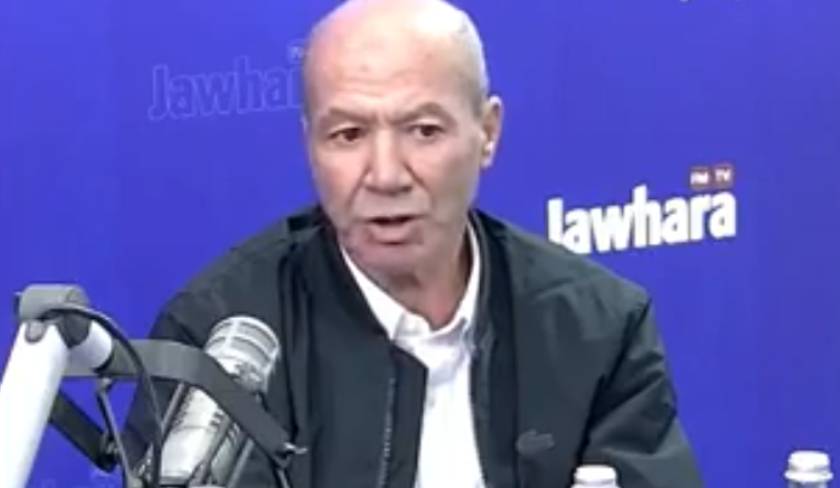
The president of the Sahline Olive Growers’ Union, Abdallah Sahraoui, spoke at length, Monday December 22, 2025, on the state of the olive growing season in Tunisia, during his intervention at the microphone of Hatem Ben Amara, in the Sbeh El Ward program broadcast on Jawhara FM. He drew up a precise diagnosis of the sector, discussing production prospects, structural financing difficulties, the question of the quality of Tunisian olive oil and the persistent imbalances on the export market.
A harvest still incomplete and hampered by prices
According to Abdallah Sahraoui, the harvest campaign is progressing at an uneven pace. As of Monday, December 22, 2025, the collection rate is between 30% and 35% nationally. This slowness is not explained solely by climatic factors, but above all by the low production prices, which dissuade some farmers from continuing the harvest.
The president of the union emphasizes that the cost of production often exceeds the prices charged, particularly when the liter of bulk oil is paid between eight and 8.5 dinars, while the selling price to the consumer fluctuates around eleven to thirteen dinars. Under these conditions, many small producers are struggling to cover their expenses, particularly those who depend entirely on the olive growing season for their income.
A sector marked by strong disparities
Abdallah Sahraoui distinguishes three profiles of producers present today in the Tunisian agricultural landscape.
The first brings together professional farmers, committed to sustainable, structured agriculture anchored in their territories.
The second corresponds to occasional operators, often employees or civil servants, owning plots of olive trees, often inherited, which they exploit intermittently, mainly to meet one-off family expenses.
The third includes non-agricultural investors, citing in particular smugglers and doctors, attracted by the olive tree as an investment, without any real productive strategy or in-depth knowledge of the sector.
This heterogeneity, according to him, complicates the implementation of a coherent policy and harms the stability of the sector.
Quality: an under-exploited Tunisian lead
On a qualitative level, Abdallah Sahraoui is particularly affirmative. He recalls that Tunisia has gone, in a few decades, from production mainly classified as “lampante” to nearly 87% of extra virgin olive oil, a level that he considers higher than that of several major producing countries.
He explains that quality depends on precise criteria: early harvest, crushing within forty-eight hours, controlled temperature below 27 degrees and low acidity level. Extra virgin oil is also distinguished by a great aromatic diversity, linked to the terroir, the climate and the varieties cultivated.
He also warned against late harvests, which could alter quality and push the oil out of the extra virgin category.
Tunisia has, according to him, recognized analysis and tasting laboratories, frequented even by foreign professionals, which constitutes a strategic asset still insufficiently valued internationally.
Abnormally low export prices
Abdallah Sahraoui illustrated the low prices of Tunisian olive oil through a direct comparison with several producing countries. He indicated that the price of Tunisian olive oil fluctuated around 3.78 euros per kilogram, compared to around 7.33 euros for Italian oil, 5.40 euros for Spanish oil, 6.70 euros for Turkish oil and 6.27 euros for Lebanese oil.
For the president of the Sahline Olive Growers’ Union, these discrepancies are explained neither by the quality of the Tunisian product, which he considers high, nor by the volumes exported, but essentially by the lack of financing, the insufficiency of storage capacities and the hasty sale of Tunisian oil on international markets.
Financing and storage: the weak link
Mr. Sahraoui points to an acute crisis in agricultural financing. Banks, according to him, no longer grant the necessary credit lines, while oil mills and exporters find themselves unable to store and negotiate under better conditions.
He believes that the National Oil Office, despite its historical experience, no longer fully plays its regulatory role. Its current storage capacity, limited to around 90,000 tonnes, remains largely insufficient to influence the market and support prices for the benefit of farmers.
Exports dominated by bulk
Over the 2024-2025 season, Tunisia exported around 268,000 tonnes of olive oil, the vast majority of which was in bulk form. The European Union absorbed almost 60.8%, with Italy, Spain and the United States as the main markets.
On the other hand, exports of packaged oil remain marginal, representing less than 5% of volumes, even though they generate significantly higher added value. Abdallah Sahraoui believes that maintaining this model has a lasting impact on the sector’s image and revenues.
A strategic opportunity not to be missed
Faced with forecasts of a drop in production in several competing countries during the next campaigns, the union leader considers that Tunisia is at a pivotal moment. It calls for a collective mobilization of public authorities, exporters and producers in order to strengthen storage, improve access to financing and develop the export of oil packaged under the Tunisian brand.
According to him, this is an opportunity comparable to that which certain Mediterranean countries have been able to seize in the past, and which could allow Tunisia to sustainably consolidate its place among the main world players in olive oil.
I.N.