On January 1, La Poste will increase its postage rates for letters and parcels by an average of 7.4%. The General Information Press Alliance is sounding the alarm.
:quality(50)/2023/07/07/64a7df4c5fe71_placeholder-36b69ec8.png)
Published
Reading time: 2min
:quality(50)/2025/12/24/maxnewsworldfive099813-694ba092d3433818066101.jpg)
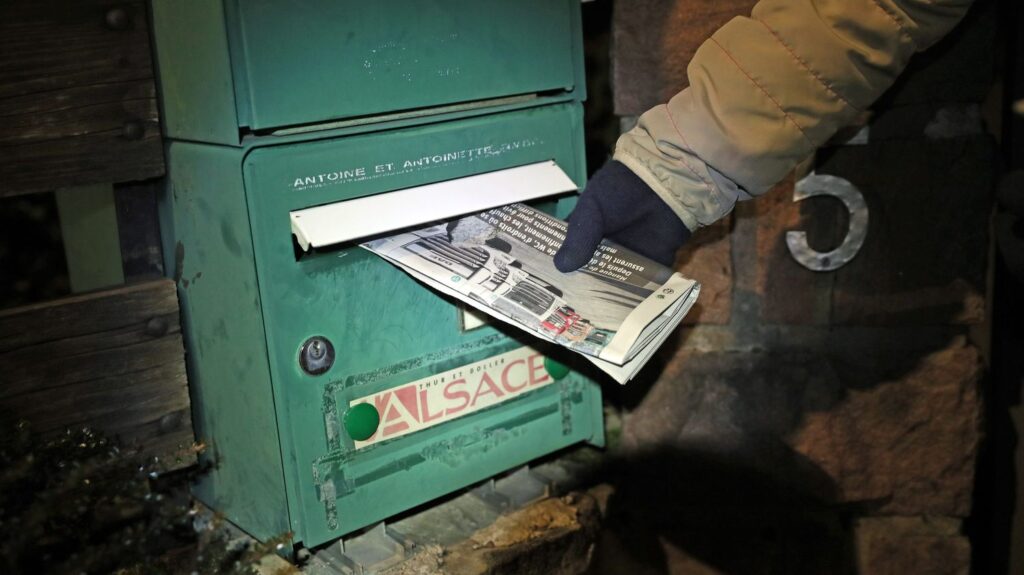
The increase planned for January 1 in La Poste rates for the transport of newspapers and magazines makes press publishers fear a “informational desertification” in the least densely populated areas and a proliferation of fake news, underlines Wednesday December 24 on France Inter Pierre Pétillault, director of the General Information Press Alliance (Apig). He highlights the challenge that information represents a few months before the municipal elections.
Calling into question an agreement signed three years ago which provided for press distribution rates to remain stable until December 31, 2026, La Poste confirmed last week a 7% increase on January 1. This decision was taken after the opinion of the regulator, Arcep. La Poste highlights the deficit in this activity.
“The risk is that transporting newspapers to subscribers in the least dense areas, therefore the most isolated subscribers, who are often elderly people, becomes economically absolutely unbearable,” explains Pierre Pétillault. Gold, “the purpose of La Poste’s public service press transport mission is to bring newspapers to subscribers located in the least dense areas”, he emphasizes.
The director of Apig fears a “informational desertification”all the more so as the municipal elections approach. “We know that, particularly in local political debates around municipal elections, the press plays a determining role. When the press withdraws, the risk is that people will feed themselves with fake news”he observes. “We don’t really understand why, to save money, we call into question the distribution of reliable information,” he adds, denouncing “a contradiction between a concern about disinformation, expressed at the highest level of the State, and a policy which goes in a completely opposite direction”.
In a column published last week, Apig and two other professional organizations highlighted that today, “more than 2 million copies (from newspapers and magazines) continue to be delivered every day.