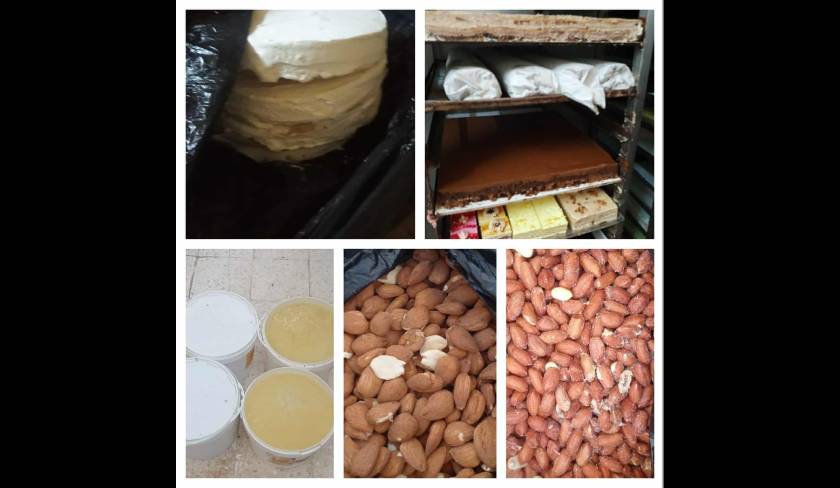
A smell of putrefaction, greenish meats, cakes kept out of the cold and fruits reduced to a blackened mush: this is what the control teams have found, in recent days, in several businesses and distribution channels across the country. As the end-of-year holidays approach, the National Food Safety Authority (INSSPA) has lifted the veil on an unsavory reality of the Tunisian food market.
In a press release published Wednesday, December 24, 2025, the INSSPA announced the seizure of approximately 21 tons of food products unfit for consumption, as well as nearly 900 cakes, in addition to the closure of eight establishments for non-compliance with basic health safety rules. These operations are part of a special control program put in place on the occasion of the end-of-year celebrations.
A national offensive against dangerous foods
During the past week, the INSSPA has intensified its control campaigns throughout the national territory. Stated objective: to protect the health of consumers and prevent health risks linked to the marketing of unsafe foodstuffs, in a period marked by a sharp increase in consumption.
The operations carried out made it possible to remove from the sales channels significant quantities of products showing clear signs of deterioration: spoiled food, expired products, goods transported or stored in unsanitary conditions, without traceability or documents attesting to their origin or their health compliance.
Spoiled meats, rotten bananas and risky pastries
INSSPA central teams seized ten tonnes of meat, poultry and turkeys unfit for consumption, showing obvious signs of corruption and emitting foul odors, in addition to quantities whose expiration date had passed. All legal procedures have been initiated against the offenders.
In Gafsa, in coordination with the municipal police, nearly a ton of poultry meat and derived products (merguez and salami) was seized. The products were in an advanced state of decomposition, transported in unhygienic conditions and lacking any documentation proving their provenance or suitability for consumption.
In Sousse, at the Hammam Sousse wholesale market, a joint commission seized around eight tonnes of totally rotten, blackened and covered with mold bananas. The goods included 400 boxes of 18 kilograms each, plus an additional 811 kilograms.
Cakes outside the cold chain and closed businesses
In Sidi Bouzid, checks led to the seizure of 255 cakes stored in unsanitary conditions, as well as 76.6 kilograms of frozen lemon juice stored in violation of health rules. The teams also seized 568 other cakes, kept outside the cold chain and lacking the mandatory information, representing a real danger to the health of consumers, particularly during this period of high demand.
In Bizerte, 322 kilograms of beef, along with liver, lungs and intestines, were withdrawn from the market. The products showed signs of partial degradation, some being expired, and were transported and stored in substandard conditions. Officers also seized 104 kilograms of pastry dough from a cake manufacturing workshop, stored in inadequate sanitary conditions.
In total, eight establishments were closed: four businesses manufacturing and selling pastries, three poultry sales points and a bakery. Judicial reports were drawn up against all the offenders.
Parties under close health surveillance
The INSSPA affirms that it will continue its control programs on an ongoing basis and calls on consumers to obtain their supplies exclusively from organized circuits, while reporting any infringement likely to harm food safety and public health.
In this regard, Mohamed Rabhi, president of the National Authority for Food Safety, recalled that, to prevent the celebrations from turning into a health nightmare, cakes and chicken, products among the most consumed during this period, are now at the heart of controls. He also stressed that the INSSPA prepares specific control programs during major occasions, particularly during the end-of-year holidays, a period when the consumption of certain products reaches high levels.
These products have thus become absolute priorities for health surveillance. The control program primarily targets food businesses open to the public, specializing in the sale of cakes, poultry and their products. Inspections cover the entire chain, from receipt of raw materials to manufacturing, storage, display and sale, to ensure that the food offered is of high sanitary quality and does not pose any health risks.
Controls are not limited to points of sale: the distribution of food products is also subject to increased vigilance, in a context where the slightest negligence can have serious consequences on the health of consumers.
I.N.