While many European countries are seeking to strengthen their measures against disinformation, South Korea has just passed an “anti-fake news” law which is causing controversy. Journalists and YouTubers could now face heavy fines.

Published
Reading time: 2min
:quality(50)/2025/12/26/000-82wr767-694e361f7a1a0695608589.jpg)
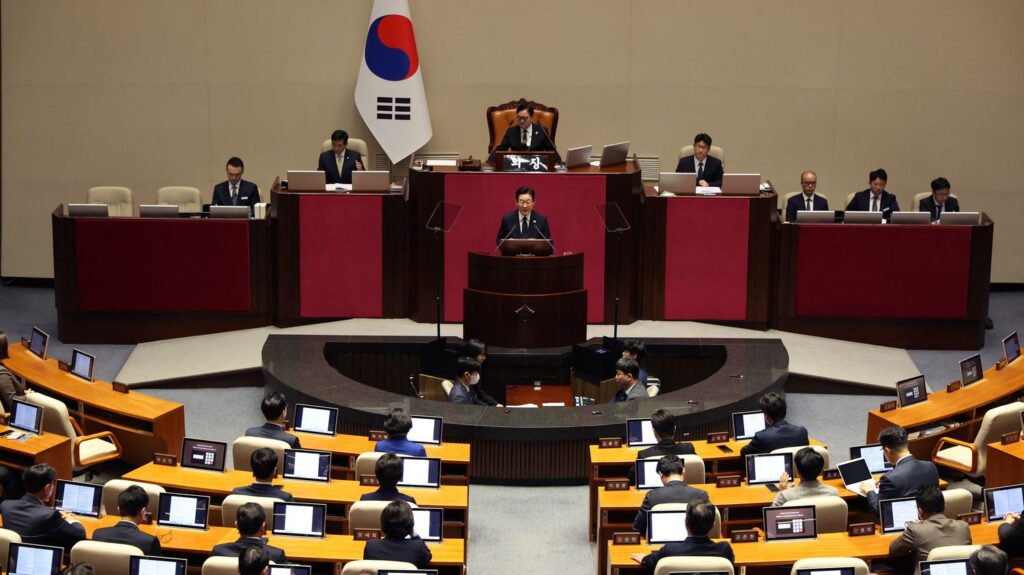
The South Korean National Assembly voted on December 24, 2025 for a new text aimed at combating disinformation more effectively. The right, which is in opposition, tried to scuttle it, but the text was overwhelmingly supported by the party of Korean President Lee Jae-myung, who is more center-left.
For several weeks, supporters of the text have explained that the country absolutely must strengthen its system against all false information which damages democracy. During the debates, they also talked a lot about the rise of what we call deepfakes, these false images and videos created with artificial intelligence to slander or smear candidates and, thus, influence elections. They also denounced scandal YouTubers, those who make a lot of money with sensationalist videos, often based on baseless rumors.
The text, which is formally a revision of the law on information and communication networks, provides for sanctioning abuse, that is to say all disseminations of “false or manipulated content”. In practice, this means that if a media outlet or a YouTuber knowingly disseminates false information, either to generate money or to harm a person or a company, they could be prosecuted in court and risk a particularly heavy fine.
If we can estimate the damage, for example the loss of money for a company, the media at fault will have to pay five times the amount of the loss linked to its false information. In cases where it is difficult to estimate the amount of damage, a fixed fine of up to 30,000 euros will be applied. In addition, if a media outlet or YouTuber is caught twice spreading fake news, they could be fined this time up to 700,000 euros.
The text, however, is not unanimous among South Korean journalists. If all professionals agree to fight against the avalanche of fake news, particularly on social networks, they wonder, however, about the way in which the courts or regulators will be able to sort the true from the false.
They fear that companies will use this law to muzzle investigative journalists as soon as they are implicated, for example in a scandal. Some lawyers are even asking the Korean president not to immediately promulgate the law, in order to have time to examine it more concretely.