The Mutualité sociale agricole offers monitoring for breeders whose livestock have been affected by contagious lumpy skin disease. franceinfo met two brothers who work on a farm in Entrelacs, in Savoie, and whose herd was slaughtered this summer.
:quality(50)/2023/07/07/64a7df4c5fe71_placeholder-36b69ec8.png)
Published
Updated
Reading time: 6min
:quality(50)/2025/12/28/elevage-69516ce8d187e709199613.jpg)
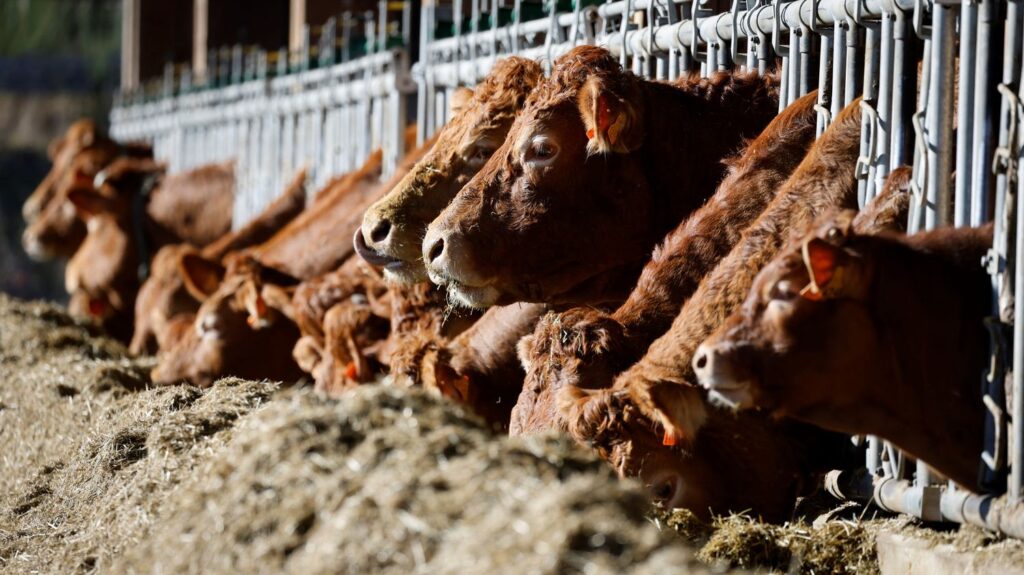
The spread of lumpy skin disease is still not stopped as of Monday, December 29, and with these new outbreaks, the total slaughter of livestock affected by the disease continues. This is one of the government’s measures to fight against this epidemic, at the heart of the anger of part of the agricultural world mobilized in recent weeks. In Savoie, where the disease arrived in France, certain farmers are monitored by a Mutualité sociale agricole (MSA) system, in particular to support them psychologically after these slaughters.
Jean-Paul and Joël, two brothers, are part of the third generation of breeders on this farm in Entrelacs, in Savoie, with 90 dairy cows. In family memory, no one remembers a day like July 17. “This day remains as the worst day of my life as a breeder”confides Jean-Paul. “We knew this could happen to usJoel continues. When she arrives (illness)we are faced with a fait accompli. These are hard, very hard times.”
Joël and his brother did not want to stay on the farm the day their 90 cows were slaughtered, an experience that was too hard to live through. “We are human, we have tears like everyone elseJoel continues. No one is infallible. These are the animals that we have raised, and which really leave overnight. It’s something that will stay with us for the rest of our lives.”
Then there are the days that follow with the loneliness. Both brothers are still scarred today. Traumatized, they stayed away from exploitation at first. “The next day, the silence in the building was the heaviest”explains Joël. “We found ourselves for three months with completely empty buildings, without noiseindicates Jean-Paul. These are the most difficult times.” “We wake up in the morning disorienteddevelops Joël. In fact, we find that our lives are based around dairy herds.”
They spent a lot of time talking with social workers from the Mutualité sociale agricole des Alpes du nord. and were in contact with a psychologist on the day of the herd slaughter. Joël and Jean-Paul allow themselves the opportunity to remind them, even if the smiles have returned since they collected new cows. “It’s nice and it’s good for morale”underlines Jean-Paul. “It’s our job as breeders that is starting again. The work allows us not to think about it too much”confirms Joel.
Jean-Paul is even a sentinel breeder. This is a relay on the ground to speak with operators in serious psychological difficulty. “We stayed in touch with certain people. We called each other regularlyexplains the breeder. We are talking about psychological monitoring. The situation was a bit closed at the beginning, but little by little, many people resorted to this valuable help in the process.” Both brothers feel lucky to have both been able to get through this time.
In the range of support put in place by the Mutualité sociale agricole, psychological care is very important. Christelle Guicherd, psychologist, alternates consultations on farms and video sessions due to the distances to be covered. At each slaughter, it is necessary to be on site. “We must intervene immediately to avoid the onset of post-traumatic stress, or even post-traumatic syndrome, but also to prevent the suicidal crisisindicates the psychologist. A farmer who finds himself overnight without his cows, without a rhythm of work and with emptiness in the barn, this can trigger a suicidal crisis.”
Christelle Guicherd has, however, not had any problems with the breeders she has been following since this summer. The subject remains taboo, only half of the farmers affected by the dermatosis are psychologically monitored over the long term. Some situations are very complicated. “They no longer necessarily see a way outexplains Christelle Guicherd. They are too tired, they don’t know what to do anymore. The idea is to make them understand that if they see a psychologist, they are not crazy.”
Christelle Guicherd has noticed a relapse in these patients in recent weeks: “What is happening in Ariège today awakens the trauma they suffered and recreates suffering.” This psychologist, who has been in contact with breeders for around ten years, is even working on a thesis on the subject of discomfort. A farmer commits suicide every day in France. “There is a mental health problemunderlines the psychologist. The crises follow one another. On a psychological level, they experience crises every year.”
At the MSA, the aim of the Réagir system, which has existed for more than 15 years, is to develop prevention. It includes social workers, psychologists and financial aid. “All these mechanisms are intended to reduce the mental burden that operators may feel”explains Fabien Champarnaud, director of the MSA of the Northern Alps.
When the first cases of lumpy skin disease were reported, this specialist was immediately afraid of suicide attempts. “It was our constant fearexplains Fabien Champarnaud. Ensuring that everyone was well and that there was no risk of acts being committed was also part of the missions of all the actors who were deployed on the ground.” Discussion groups are being set up to allow these breeders, sometimes isolated, to talk together about their traumas.
If you have suicidal thoughts, if you are in distress or if you want to help someone in suffering, there are anonymous and free listening services. The national number 3114 can be reached 24/7 and provides resources on his website. The association Suicide listens offers similar support on 01 45 39 40 00. Further information is available on the website of the Ministry of Labor, Health, Solidarity and Families.