Published
Updated
Reading time: 2min – video: 2min
:quality(50)/2025/12/29/gobelets-jetables-l-interdiction-a-ete-reporte-695295ad4a2db764666493.jpg)
2 minutes
While they were to be banned from January 1, 2026, disposable cups containing plastic will see their lifespan extended until 2030. A decision taken by the government to give the industry more development time.
This text corresponds to part of the transcription of the report above. Click on the video to watch it in full.
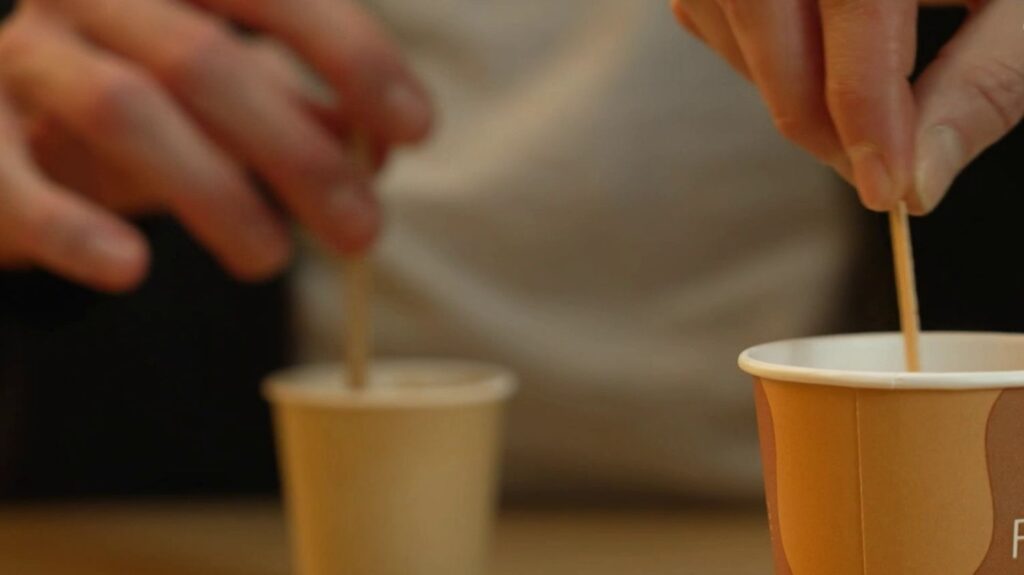
You probably used one this morning. At the machine or at the counter, this little cup often accompanies your coffee. Since 2020, it is no longer entirely made of plastic, it’s the law. But do you know what it is made with? “I imagine with paper, a kind of cardboard. But I think there is also a little plastic film inside”indicates a woman.
Indeed, as indicated by the logo on it, most of these cups contain a portion of plastic8% maximum. An essential material according to David Schisler, president of CEER Schisler: “There is plastic inside the cup. It is a coating inside the cup which guarantees the seal. The seal is so that the liquid is not absorbed by the cardboard. In addition, the plastic allows the welding function, that is to say to assemble the two parts of the cup and to assemble the bottom”.
Normally, this plastic in cups must disappear from January 1st. The government is proposing to postpone the ban until 2030. It wants to give the industry more time to develop alternatives. “Today, these technologies are in development, they are not mature for the volume and for all the applications”says David Schisler. Manufacturers assure us that the cup without plastic film is not yet ready.
These are containers that remain disposable, so some want to put an end to this single use and favor reusable tableware. “This measure should be accompanied by an alternative to single-use. In Sweden or Germany, drinks sellers have the obligation to offer customers a reusable container if they wish.”explains Bénédicte Kjær Kahlat, legal manager at Zero Waste France. The government promises a progress report in two years to ensure that plastic-free cups will be available in 2030.