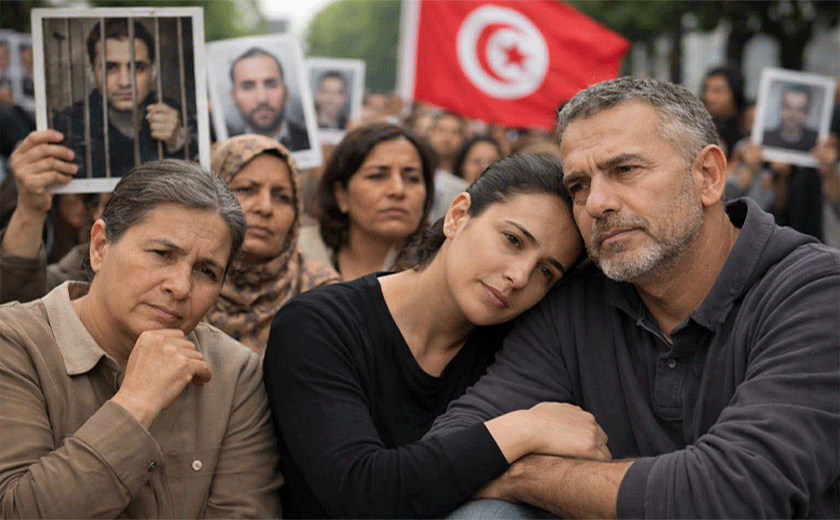
Through a conference organized on Saturday by the Al Joumhouri party, families of political prisoners and civil society actors testified to the social, economic and psychological consequences of detentions. Between loss of income, legal pressure and stigmatization, these relatives are paying a heavy price in the face of growing repression in Tunisia.
The Al Joumhouri party organized, Saturday December 20, 2025, a press conference devoted to the situation of political prisoners in Tunisia and the impact of their detention on their families. This meeting, entitled “ما بعد القضبان: حكايات لم تُروَ” (Beyond the bars: stories never told), was held at the party headquarters, also housing the editorial staff of the Al Mawqif newspaper.
Beyond the testimonies given by relatives of detainees, the conference gave the floor to several actors from civil society, including Romdhane Ben Amor, spokesperson for the Tunisian Forum for Economic and Social Rights (FTDES), who provided a critical analysis of the evolution of public freedoms and the political and judicial climate in Tunisia.
Political prisoners: emblematic journeys of wider repression
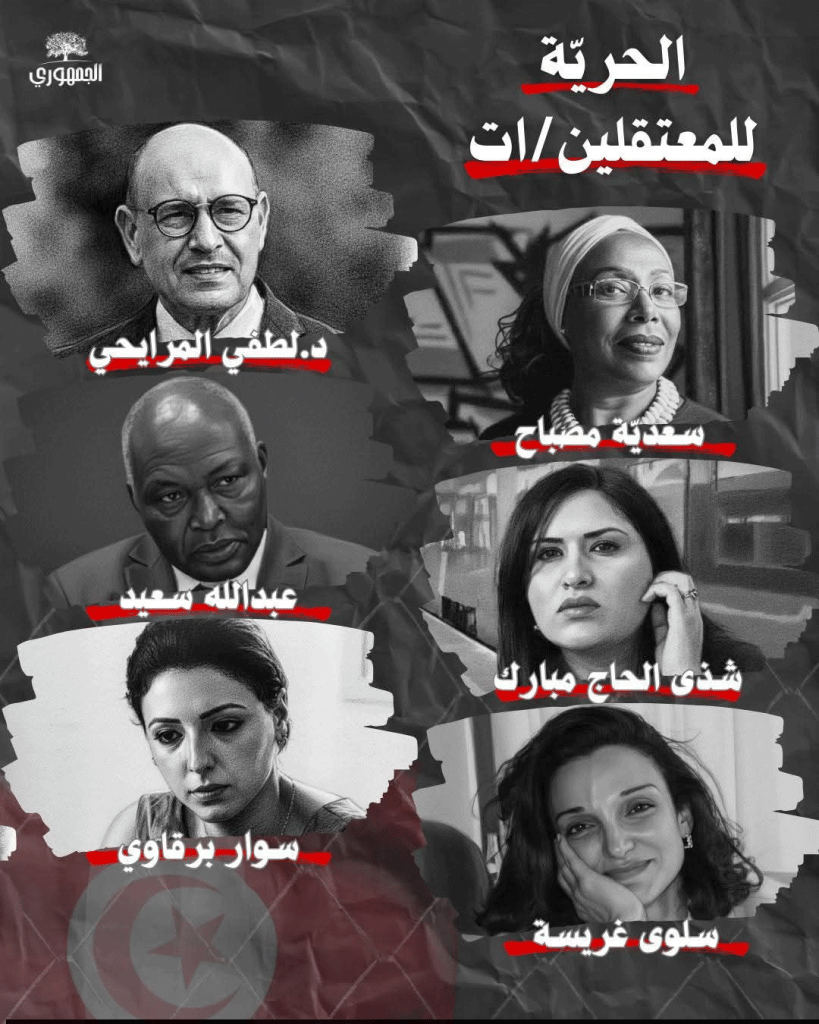
The conference recalled the situation of several political prisoners and activists currently detained.
Lotfi Mraïhi, president of the Popular Republican Union (UPR) and former presidential candidate, was arrested as he prepared to run as a candidate in the 2024 presidential election. He is being prosecuted for money laundering, illicit gains and possession of unauthorized accounts. Sentenced to six months in prison on appeal in November 2024 for disseminating false information, he was arrested in July 2024 after a wanted notice. His conviction linked to the 2019 presidential election, initially heavier, was reduced on appeal in September 2024 to six months in prison, accompanied by a lifetime ban on running for office. He experienced prolonged preventive detention at the end of 2024 and the beginning of 2025.
Saadia Mosbah, founder of the Mnemty association and anti-racist activist, was arrested on May 6, 2024. She is being prosecuted for financial irregularities and remains detained. An emblematic figure in the fight against anti-Black racism in Tunisia, she contributed to the adoption of the 2018 Tunisian law against racial discrimination. His association, active since 2013, works to defend the rights of black Tunisians and sub-Saharan migrants. His home and Mnemty headquarters were searched, with documents and equipment seized, and several members of the association were questioned. If the case is officially of a financial nature, many organizations believe that his arrest is part of a racist defamation campaign and aims to send a message to structures active in the defense of migrants and minorities.
Chadha Haj Mbarek, journalist, is detained in connection with the so-called Instalingo affair. Indicted for conspiracy against state security, insulting the President of the Republic and endangering external security, she was sentenced to five years in prison in February 2025. The charges are based on editorial content and digital productions deemed hostile to power. Human rights organizations say the case is largely based on political interpretations of journalistic activities. She has been incarcerated since July 2023 and her case is widely reported in international reports on press freedom.
Abdallah Saïd, founder of the Enfants de la Lune association in Médenine, was arrested on November 12, 2024. He is being prosecuted for conspiracy against the external security of the State and remains detained. He is known for his local community involvement, particularly in favor of children suffering from rare genetic diseases and for his support for exiles. His case is being handled by the anti-terrorism unit, a first for a solidarity NGO manager. He is accused of having received foreign funding used as part of an alleged plot linked to the “settlement” of migrants in Tunisia.
Siwar Bargaoui, treasurer of the Azimoun movement, was sentenced to four years and seven months in prison for signature fraud during the collection of sponsorship for the presidential campaign of candidate Ayachi Zammel. She is currently detained.
Salwa Ghrissa, founder of the Association for the Promotion of the Right to Difference (ADD), was arrested on December 9, 2024. She is being prosecuted for suspicion of foreign financing and remains detained in Manouba prison. A human rights activist, researcher and former higher education professor, now retired, she is known for her commitment to minorities and the right to be different. According to NGOs, a financial investigation targeting ADD partners and service providers had been underway for several months. His family denounces prolonged detention without trial, which they consider to be indicative of the use of the accusation of foreign financing to put pressure on human rights associations.
Behind bars, families caught in a vice
In his speech, Romdhane Ben Amor painted a picture that he described as alarming of the current situation, believing that repression is no longer limited to incarcerated people, but now extends to their families. According to him, they bear the brunt of the economic, social and psychological consequences of arrests and legal proceedings.
He spoke of situations marked by loss of income, suspension of salaries or pensions, as well as the inability of many families to cover the basic needs linked to daily life, travel for prison visits, food or medical care. To these material difficulties are added, according to his remarks, heavy psychological pressures, linked to judicial uncertainty and social stigma.
Romdhane Ben Amor insisted that injustice, as he perceives it, does not stop at the prison walls. He stressed that several detainees find themselves in prolonged detention without final trial, finding themselves deprived of any source of subsistence, while their families alone bear the financial and social burden of the situation.
He described this reality as collective punishment, affecting entire households and contributing, according to him, to lastingly weakening the Tunisian social fabric.
A silent “collective punishment”
The FTDES spokesperson also considered that the proceedings initiated against certain associations are not a coincidence. He explained that the repression first targeted associations active in monitoring and observing the electoral vote, before gradually extending to other components of civil society. He mentioned a strategy that he considers deliberate of targeting associative work, in particular organizations active in the fields of migration, humanitarian aid and the defense of the rights of migrants, particularly from sub-Saharan Africa.
According to Romdhane Ben Amor, the financial or administrative accusations made against these structures would serve above all to criminalize civil and solidarity action, in a context marked by a progressive hardening observed since 2023.
The speaker warned of the indirect effects of this policy, saying that it contributes to creating a climate of fear within civil society. Dismissals, professional marginalization, smear campaigns and legal proceedings are, according to him, all mechanisms aimed at discouraging any form of public or critical engagement.
He recalled that journalists and activists, some of whom had benefited in the past from dismissal decisions, today find themselves being prosecuted or sentenced again. A situation that he described as revealing an exploitation of justice.
For Romdhane Ben Amor, the current situation constitutes a direct threat to public freedoms and to the very existence of an independent civil society in Tunisia. He called for increased vigilance, both at the national and international level, in the face of what he considers to be a process of progressive dismantling of spaces of freedom, solidarity and expression.
“Break the silence”
Through this conference, the Al Joumhouri party and the organizations present affirmed their desire to break the silence imposed on the families of detainees, break their isolation and renew solidarity with all people who are victims of arbitrary detention and attacks on fundamental rights and freedoms.
The organizers also called for identifying and assuming political and legal responsibilities in a context that they consider marked by a continued deterioration of public freedoms in Tunisia.
I.N.