Published
Reading time: 2min – video: 4min
:quality(50)/2025/12/29/video-28-69529cb4840d0594038187.jpg)
5min
Monday, December 29, the 1 p.m. news offers you a journey through one of the largest deserts in the world: the Gobi desert. It extends from northern China to Mongolia. So popular that sometimes there are crowds on the dunes.
This text corresponds to part of the transcription of the report above. Click on the video to watch it in full.
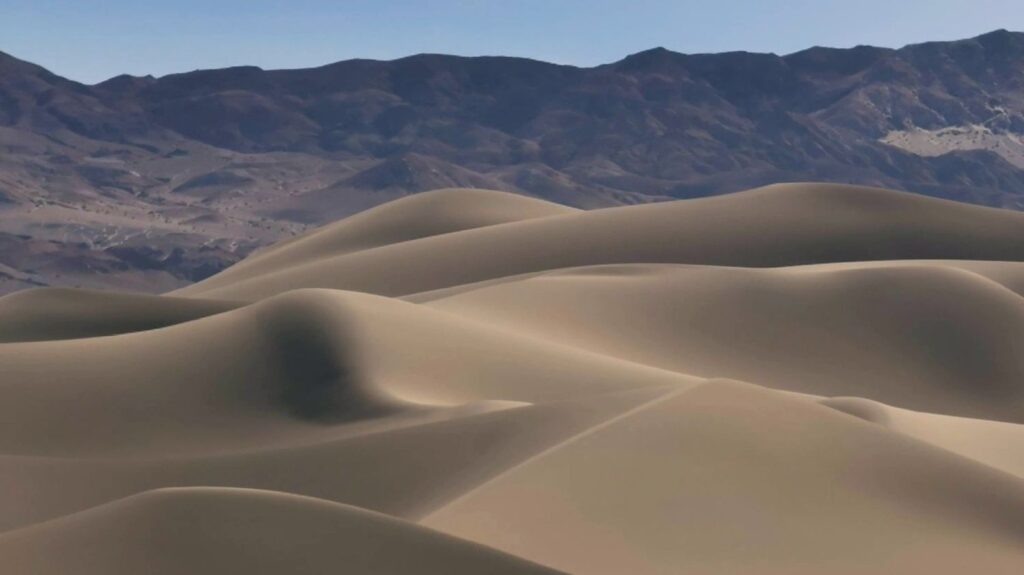
To the west of the Gobi Desert, the steppes stretch as far as the eye can see. They adjoin dunes and rocky hills. A space devoid of any human presence? Not quite.
Chinese tourists set off to attack the dunes. They form a highway of camel walkers. There are more of them every year. More than 3 million visitors in 2023 have been recorded. The bravest climb in single file.
At the edge of the desert, camels have always been part of the landscape. The ancient trade crossroads was previously the gateway to China. “I’m in the desert and I feel like I’m traveling the ancient Silk Road”shares a tourist. There are so many of them that there is even a special camel traffic light. 1,500 animals take the same path every day with delighted tourists.
One of the particularities is an oasis: a lake fed by a natural underground river. It never runs dry. The Chinese call it the “miracle of the desert”. And on the pagoda which borders it, we make a wish. “It’s a unique place. It is said that the more of us who make this gesture, the more the wish can come true,” says a tourist.
Far from the crowds, it’s a different atmosphere. You only need to drive a few kilometers to find yourself completely alone. Xu Hayang is a photographer, the Gobi desert, his playground. The curves, the lines, the frame. This local child says he is amazed by such a decor which changes with the sun throughout the day. “When the light changes, the color of the dunes also changes. With the sunset, everything turns red, whereas now the sand is yellow. I grew up and have always lived near the desert. Today, more than ever, I think it is a treasure that must be preserved”says Xu Hayang, photographer in Dunhuang (China).
A watchtower, symbol of invasions in ancient China, stands in the desert, where history is never far away. And the most remarkable: a construction in the rock, with caves all around. There are more than 700 of them, most decorated with Buddhas and paintings dating from the 4th century.
You have to wait until the end of the day for Dunhuang to find all its splendor. Pilgrimage to the summit for the sunset. Where caravans once crossed the Gobi Desert, the Chinese contemplate the sand mountains, their heritage in the northwest of the country.