Individuals and businesses should check that their phones or connected equipment will still be able to work. The telecoms regulatory authority (ARCEP) offers steps if you are concerned.
:quality(50)/2024/09/14/nicolas-arpagian-66e5be37c179f515361798.png)
Published
Reading time: 3min
:quality(50)/2025/12/20/gettyimages-1237753070-6946dcfe5fa2c172074119.jpg)
The first digital mobile telephone network, 2G, began in France on 1East July 1992. It allowed the general public to make telephone calls while traveling. The so-called connections of 3th generation (3G), allowing high-speed connections, were put into service in 2004.
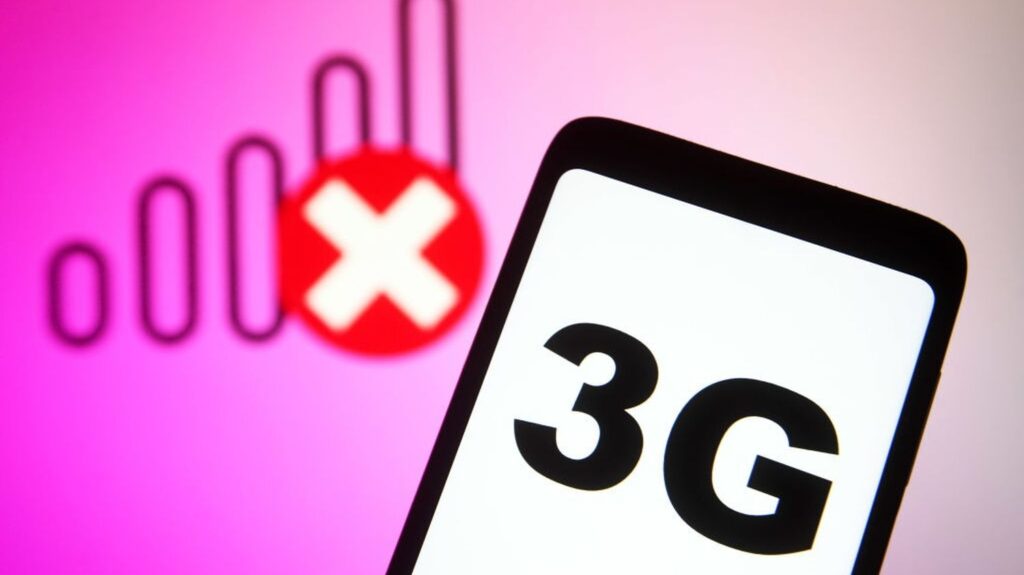
These two modes of communication will gradually be deactivated from 1East quarter 2026. This will be done in stages until December 2026 for 2G, and until the end of 2029 for 3G. Each operator has its own agenda for switching off its equipment on these deadlines which are announced by the Electronic Communications Regulatory Authority (ARCEP).
This presents on its site the procedure to follow to find out whether or not your phone is affected by the closure of 2G/3G and compatible with 4G networks.
A subject which is not trivial, when we estimate that at 1East July 2025, in France this still concerned 2.7 million SIM cards, at a rate of 1.6 million in 2G and 1.1 million in 2G/3G.
Several reasons explain this technological breakthrough. On the one hand, communications security. Because 4G and 5G work with advanced encryption protocols that avoid the most accessible forms of hacking, also thanks to much more robust user authentication solutions.
On the other hand, energy consumption. Because 4G and 5G networks use fewer resources than previous generations, 2G and 3G.
Finally, 4G and 5G technologies offer us opportunities to access digital services more efficiently through much faster download and browsing speeds.
Whether it concerns condominium managers or industrial site managers, since numerous equipment (alarm and remote monitoring systems, intercoms, elevator remote alarms and other tools for remote control of boilers or water distribution) are still very often equipped with 2G connections.
ARCEP estimates that in June 2025, 3.2 million of these devices were affected: 1.2 million in 2G and 2 million in 2G/3G to establish machine-to-machine communications on a daily basis.
It is therefore a question of carrying out their evaluation to find out whether or not they are compatible with 4G/5G networks. And replace them if necessary. This requires investments to be made, and responsibility for recycling these devices.
So many steps which must therefore be anticipated from the start of 2026.