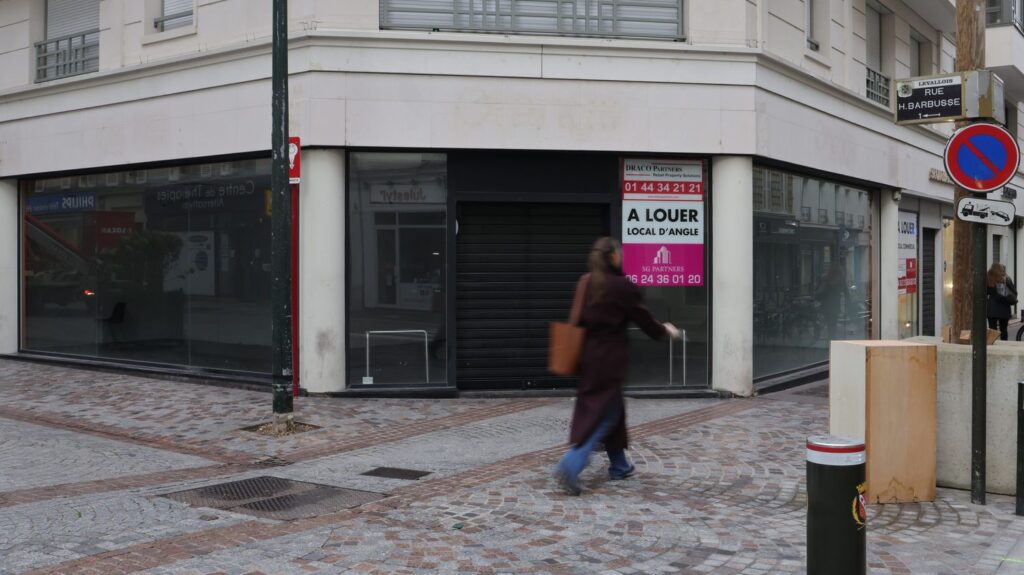
The establishment of Shein stores in France reignites the anger of retailers, already weakened by e-commerce and low-cost competition. A report proposes a “commercial reconquest” with taxes on imported online purchases or on the logistics warehouses of internet operators to protect city centers.
:quality(50)/2024/03/04/emmanuel-cugny-65e6021ef3340792811771.png)
Published
Updated
Reading time: 3min
:quality(50)/2025/11/06/commercescentrevilles-690c48cf54472529764044.jpg)
The arrival of Shein stores in Reims, Limoges, Grenoble and Dijon in particular, each time with very low-priced items, imported from Asia and manufactured under deplorable social and environmental conditions, provokes numerous reactions. Just like the opening, this Wednesday, November 5, from the very first global physical store of the ultra-fast fashion brand at BHV Marais. Already turned upside down for years and forced to adapt to online commerce with giants like Amazon or hypermarkets, merchant associations take a very dim view of this new blow to their activity. The government announced, moreover, that it was initiating a procedure to “suspend” the Shein platform following the scandal over the sale of child-like sex dolls.
In the midst of the controversy, a report could help the executive. Commissioned in May 2025 by the former ministers of the City, Juliette Méadel, and of Commerce, Véronique Louwagie, this report was submitted on Wednesday to their successors Vincent Jeanbrun and Serge Papin. Written by stakeholders on the ground, including the mayor of Saint-Quentin, Frédérique Macarez, and the boss of Coopérative U, Dominique Schelcher, the report provides a worrying inventory of local commerce and makes around thirty recommendations for re-establishing essential businesses in urban areas.
The authors of the report deploy what they call “a commercial reconquest strategy” to combat unfair competition from online platforms and the underground economy. Among their suggestions are a battery of measures including a tax of at least two euros on online purchases of imported items. The proceeds from this tax would be redirected towards programs to revitalize city centers. Another proposal is to tax the logistics warehouses of internet operators like commercial premises or, further upstream, to delist non-European platforms which do not respect our health, environmental and social rules.
One of the proposals also aims to strengthen the power of local elected officials, because nothing can be done effectively without direct intervention on the ground. The report therefore suggests expanding the powers of mayors for any new installation requests, by deciding, for example, to increase taxes on vacant commercial premises.
The subject is difficult, because it involves a battery of specific legal provisions. French law applies to all operators, whoever they are and wherever they come from. It is impossible to favor or penalize one or the other, at the risk of being dismissed by the courts, or even the Constitutional Council, which has guaranteed our own rules decreed by the Republic for almost 70 years. Foreign platforms know this very well.