/2025/10/30/080-hl-xbouzas-2932773-1-6903a454159b8829068142.jpg)
During the examination of the first part of the finance bill, devoted to state revenue, elected officials notably approved the tax exemption for overtime, modified the rate of a tax on Gafam and rejected the Zucman tax. Franceinfo summarizes the changes made to the text.
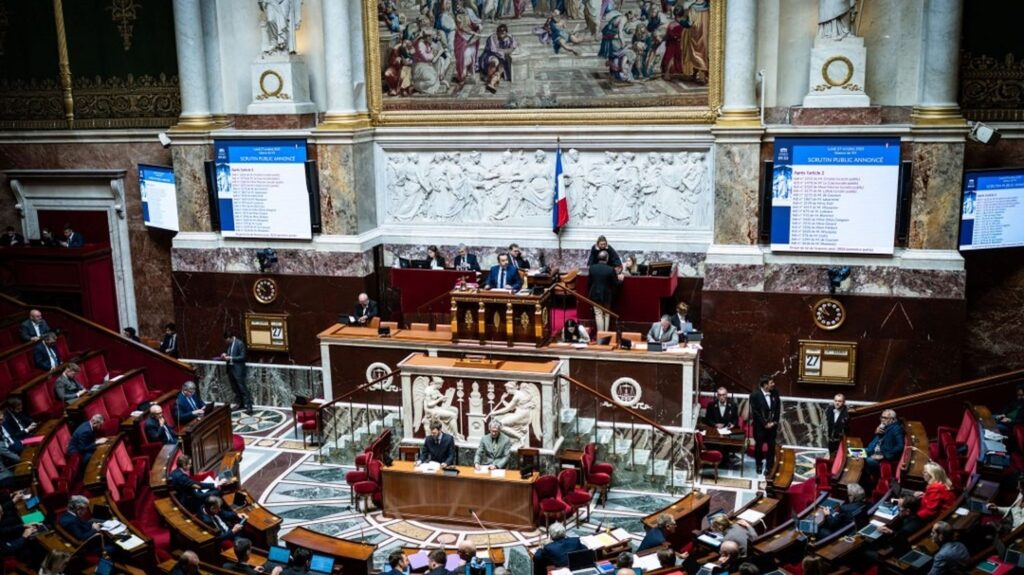
Prime Minister Sébastien Lecornu hammered home this, Friday October 24, at the opening of the budgetary discussion in the National Assembly: the finance bill (PLF) that his government presented for 2026 was “imperfect” and the task of parliamentarians was therefore to improve it. During seven days of sometimes tense debates, deputies from all sides therefore attempted to modify the first part of the text, devoted to state revenue.
The debates were to end on Tuesday, November 4, but because they were unable to address all the subjects, parliamentarians will have to resume their work after the vote on the first part of the Social Security financing bill, expected in principle on Wednesday, November 12. Before this handover, the deputies were able to create new revenue for the State, in particular by increasing the taxation of high incomes and multinationals. They also rejected the freezing of the income tax scale as well as the Zucman tax.
Franceinfo reviews the significant modifications made to the finance bill, before the end of its examination and probable new changes during the parliamentary shuttle between the National Assembly and the Senate.
The tax on unproductive wealth: adopted
An alliance of PS, RN and MoDem deputies approved Friday evening a modification of the real estate wealth tax (IFI) which integrates into the tax base “unproductive assets” such as the “non-productive real estate, tangible movable property (precious objects, cars, yachts, planes, furniture, etc.), digital assets, life insurance for funds not allocated to productive investment”by excluding the sole or main residence, as the National Rally has long desired. If the PS welcomed a reestablishment of the solidarity tax on wealth (ISF), La France insoumise on the contrary judged that the tax on real estate wealth was “weakened”. The RN welcomed the vote on a measure “inspired” of its program.
The increase in taxation on share buybacks: adopted
In the Assembly, parliamentarians also voted for an amendment from the National Rally which profoundly modifies the rate applicable when repurchasing shares, bringing it to 33% instead of 8%. This amendment should bring in 8 billion euros, according to RN deputy Kévin Mauvieux. For its part, La France Insoumise succeeded in having, in a very close vote, an amendment introducing an exceptional tax on superdividends.
Tax on profits of multinationals: adopted
The deputies largely approved an amendment from La France insoumise to tax the profits of multinationals in proportion to their activity carried out in France and to fight against tax evasion and optimization. The measure garnered the votes of the various left-wing groups and those of the National Rally, against those of the government camp (207 against 89). The government was opposed to it. This “universal tax” on multinationals, inspired by the Attac association and the economist Gabriel Zucman, could bring 26 billion euros to the state budget, according to its defenders. For the Minister of the Economy, it would be “20 billion troubles” in addition for France, signatory to more than 125 tax conventions with 125 countries.
On Wednesday, an alliance between the left and the National Rally allowed the adoption of another amendment, carried by La France insoumise, which aims to broaden the scope of application of the minimum tax of 15% on the profits of multinationals. Established by the government in 2024 as part of an international agreement led by the OECD, this tax aims to put in place a coordinated response to tax evasion by large companies. Limited to companies which record more than 750 million annual revenues, this measure would only concern 10% of multinationals, according to the Oxfam association. Thus, the National Assembly voted to lower the threshold to 500 million euros and therefore affect more multinationals.
Tax exemption of alimony: adopted
The tax exemption will concern recipients of alimony. This financial contribution received by one of the parents (overwhelmingly women) after a divorce or separation, for the maintenance and education of a minor child, would no longer be subject to income tax if the budget were thus voted. The amendment submitted by environmentalist Marie-Charlotte Garin imposes a limit on this tax advantage of 4,000 euros per child, capped at 12,000 euros per year. In mirror image, the deputies voted to tax people who pay alimony, against the advice of the government.
Tax exemption for overtime: adopted
The deputies validated the total tax exemption for overtime, proposed by Republican elected officials. The right, the far right and the majority of Macronists approved this amendment by Laurent Wauquiez, which removes the existing ceiling of 7,500 euros beyond which overtime is taxed. The measure will cost one billion euros, according to the Minister of Public Accounts.
A tax credit for nursing home costs: adopted
Proposed by La France insoumise, this measure was narrowly adopted with the votes of the extreme right and the left, with the exception of the socialists who defended another similar measure. It aims to support residents in nursing homes or their families with modest incomes, by deciding to transform a 25% tax reduction on accommodation costs into a tax credit. Currently, only taxable persons benefit from the tax reduction for their accommodation costs, which therefore does not apply to the most modest households who do not pay taxes.
Reduction of the tax loophole for journalists: adopted
MEPs validated the lowering of the income ceiling below which journalists can benefit from a tax reduction. Journalists can currently benefit from a reduction of 7,650 euros when they receive up to 93,510 euros annually. An amendment from Denis Masseglia (Together for the Republic) lowers this ceiling to 3.5 minimum wage, or today 75,676 euros. It was approved largely by show of hands by the deputies, despite the unfavorable opinion of the government.
The removal of an advantage for fast fashion: adopted
MEPs also adopted an amendment from the Horizons group which consists of removing, for fast-fashion companies like Shein or Temu, a tax advantage “from which they currently benefit under article 238 bis of the General Tax Code, so that they can correct their production and marketing methods”.
The contribution on high incomes: extended
The differential contribution on high incomes, introduced in 2025 in the Bayrou government budget, has been extended. On the first day of examination of the budget, the deputies largely approved (279 for and 25 against) the maintenance of this system until the deficit falls below 3% of gross domestic product (GDP), which could occur in 2029, depending on the government’s objectives. Initially, the latter defended an extension for the year 2026 alone. This measure sets a minimum tax rate of 20% for households whose income exceeds 250,000 euros per year, or 24,000 households, according to the government. It should bring in 1.5 billion euros in 2026, according to the executive.
The tax on profits of large businesses: modified
MEPs adopted an amendment which modifies the tax rate on the profits of large businesses. He “proposes to concentrate” the effort required of companies “on the largest companies in our country and to reduce the burden on mid-sized companies”according to the government, at the origin of this amendment. Objective: to increase the yield of the tax to 6 billion euros, compared to 4 billion initially planned in the 2026 finance bill. Supported by the entire left, but also by MoDem deputies, this modification divided the presidential Renaissance party.
Doubling the tax on Gafam: adopted
MPs voted to double the rate of the Gafam tax, which targets large tech companies, including Google, Apple, Facebook, Amazon and Microsoft. In committee, the Macronist elected officials had proposed increasing the rate of this tax from 3% to 15%, before changing their minds during the session and supporting a compromise: 6%. Before the vote, the Minister of the Economy, Roland Lescure, had called on MPs to be cautious, warning against possible reprisals from Donald Trump’s administration: “If we introduce a disproportionate tax, we will have disproportionate reprisals.”
The tax on asset holding companies: modified
The boss of the Les Républicains deputies, Laurent Wauquiez, obtained the adoption of a watered down version of the tax on asset holding companies, at the initiative of his group. The government originally proposed a 2% tax on holding companies holding at least five million euros in assets, with numerous exceptions, including the exclusion of business assets. It was supposed to bring in a billion euros. The adopted amendment reduces the number of holding companies concerned, by raising the threshold for ownership by a natural person from 33% to 50%, and limits the tax base by listing the types of property concerned. “In the end, this tax is no longer a gruyere cheese, it’s a potato chip: it no longer concerns anyone”castigated the socialist Philippe Brun.
The Zucman tax and its lighter variant: rejected
Discussed and debated for months, praised to the skies by the left, the Zucman tax did not pass the National Assembly. Parliamentarians from the central bloc, the right and the National Rally stood up against this measure, which aimed to establish a minimum tax of 2% on assets of more than 100 million euros. It was rejected by 228 deputies against 172. The deputies also rejected a lighter version of this tax, proposed by the socialists.
Universal tax targeted against tax evasion: rejected
The deputies rejected an amendment from La France insoumise on the targeted universal tax, by one vote (131 for, 132 against). This measure was to make it possible to “dissuading people who go abroad to avoid taxes”had defended the rebellious Eric Coquerel, seeing “a dissuasive tax”. The elected representatives of the National Rally voted for it, unlike the Macronist bloc. The abstention of socialist deputies was singled out by several political leaders of La France insoumise. “The Faure-Lecornu pact is on full display in the hemicycle”for example denounced Thomas Portes. Accusations rejected by the Socialist Party.
Freezing the income tax scale: rejected
At first reading, MEPs largely said “no” to freezing the income tax scale. A broad coalition of deputies, from the far right to the rebels, including the right and part of the Macronists, approved an amendment from Laurent Wauquiez, the boss of the LR group, which proposed indexing the scale to inflation estimated at 1.1%. This is a setback for the government, because the amendment by the leader of the right-wing deputies was adopted against the advice of the Minister of Public Accounts, Amélie de Montchalin. Freezing the scale could have brought in 2 billion euros.