Giant tech firms and the bosses behind them are becoming as politically powerful as nation-states, the new head of the United Kingdom’s foreign intelligence agency has warned.
In her first public speech as MI6 chief this month, Blaise Metreweli said, “our world is being remade” by new technology products in a way once only depicted in science fiction.
Recommended Stories
list of 4 itemsend of list
Speaking from the MI6 headquarters in London, she warned that technologies are “rewriting the reality of conflict as they converge to create science fiction-like tools”. She said some algorithms used by social media platforms could “become as powerful as states”.
Metreweli warned that the “defining challenge of the 21st century” was “not simply who wields the most powerful technologies, but who guides them with the greatest wisdom”.
Just a handful of tech giants now control how information reaches the public, raising concerns that their owners could manipulate information and communications for their preferred political outcomes.
While Metreweli did not cite specific examples, two or three US firms dominate social media and Elon Musk, the owner of X (as well as SpaceX and Tesla), also controls Starlink – the satellite communications network that is considered crucial for the Ukrainian military in its ongoing war with Russia.
This is a type of monopoly, but while Metreweli was talking mainly about political power and influence, monopolies can wield immense economic power as well.
Monopolies in other industries are also causing havoc. India’s airline market was rocked by rising prices and a pilot shortage recently, while Netflix’s proposed merger with Warner Bros has led to concern that a streaming monopoly could harm creative and artistic industries and restrict consumer choice.
Which other monopolies are causing controversy?
Monopolies are not just an issue for the technology sector; they are disrupting other industries as well.
Netflix and Warner Bros
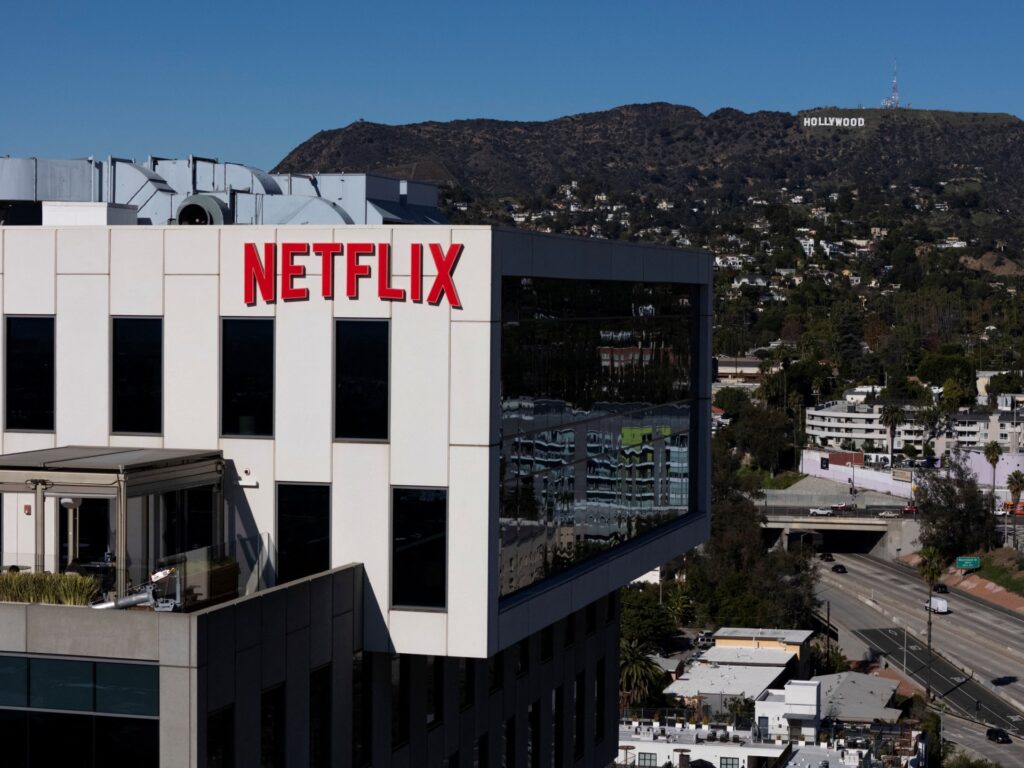
On December 5, Netflix agreed to buy Warner Bros Discovery in an $82.7bn deal, close on the heels of the merger of Paramount with Skydance Media earlier this year and, in 2019, Disney’s purchase of fellow studio 21st Century Fox.
Experts and government officials have raised antitrust concerns about the planned acquisition, noting that the enlarged market share controlled by one group following such a merger could throw up problems.
Consumers seem to agree. Netflix was hit with a lawsuit on December 9 seeking to block the merger.
The lawsuit asserts that the Warner Bros deal would eliminate one of Netflix’s closest rivals – HBO Max – and give Netflix control over several major Warner Bros franchises, including Harry Potter, DC Comics and Game of Thrones.
The proposed class action, filed by a subscriber in a federal court in California, says this will reduce competition, push up prices, and limit content choice for US viewers.
Netflix has suggested that social media video platforms such as YouTube and TikTok should be included in any survey of the market, which would shrink its perceived market dominance, and has argued that the costs for consumers would be lowered because Discovery Warner Bros services could be bundled with a Netflix subscription.
IndiGo
On December 2, air travel across India was thrown into chaos when the country’s largest airline, IndiGo, cancelled thousands of flights, stranding hundreds of thousands of passengers at airports across the country.
Passengers faced mass cancellations due to pilot shortages, because IndiGo – which operates roughly 2,200 flights a day – had failed to adopt new pilot rest-and-duty rules introduced by the government in 2024.
Though the airline had been granted temporary exemptions from the new rules to keep it operational, it still failed to comply with the revised deadline of November 1. Former AirAsia CFO Vijay Gopalan blamed IndiGo’s “very, very lackadaisical, nonchalant attitude” in adapting to rule changes.
On December 6, India’s aviation watchdog, the Directorate General of Civil Aviation (DGCA), sent a letter to IndiGo CEO Pieter Elbers, warning him of regulatory action. “You have failed in your duty to ensure timely arrangements for conduct of reliable operations,” the Reuters news agency reported.
For now, IndiGo has been exempted from capping the weekly number of landings between midnight and early morning until February 10. Meanwhile, the government has ordered a high-level inquiry to determine the cause of flight disruptions.
Together, IndiGo and Air India control 92 percent of the market in India, raising questions about the lack of competition.
The recent crisis, in particular, has highlighted the risk of overreliance on a single carrier, with IndiGo controlling 65 percent of the market share.
This month, it was revealed that Indians are facing steep rises in airfares as a direct result of the lack of competition, effectively shutting a large part of the population out of air travel.
In a study published in November last year by Airports Council International (ACI), a global trade association representing more than 2,000 airports in more than 180 countries, India saw a 43 percent rise in domestic airfares in the first half of 2024, compared with 2019, the second highest in the Asia Pacific and West Asia regions after Vietnam.
Why should monopolies be restricted?
Monopolies form when one firm outcompetes others through innovation or control of scarce resources, creating barriers for rivals. While often criticised for limiting choice and raising prices, they can sometimes deliver goods and services that fragmented competition could not sustain.
Still, there are a number of reasons that many economists warn against allowing monopolies to emerge.
Monopolies can undermine a country’s economic activity by weakening competition and stifling innovation. Monopolies can also distort prices. Dominant firms may limit supplies in order to keep prices artificially high, squeezing consumers.
“In a world that’s been suffering from a cost-of-living crisis, anything that drives up the price of goods should get people worried,” said Max Lawson, head of policy and advocacy for Oxfam.
Finally, monopolies stifle entrepreneurship. One group having control over infrastructure, data, or supply chains allows that group to favour itself or other preferred firms by raising the barrier to entry for new firms or potential competitors.
Economically, this can mean fewer jobs, less innovation and greater wealth inequality. It can also, in the case of social media, be used to smother reporting, opinions, or even political alternatives.
Guy Standing, an economist and research associate at SOAS University, said, “They (monopolies) can gain economies of scale, where the unit price of production (goes) down and then raise the price for consumers … as there’s no competition left.”
He noted that, across an array of different industries, private monopolies “reap vast wealth and benefits for their shareholders at the expense of consumers, which exacerbates income inequality”.
Have monopolies been a big issue in the past?
US economic history is awash with examples of monopoly power. In the late 1800s, John D Rockefeller’s Standard Oil crushed rivals through “predatory pricing”, deliberately undercutting competitors’ prices to drive them out of business before later raising prices.
By the 1890s, Standard Oil controlled approximately 90 percent of US oil refining.
At roughly the same time, railroad monopolies distorted regional economies by using discriminatory freight rates, favouring certain regions and industries while undercutting firms that challenged their dominance.
Modern technology monopolies echo these. Google, for instance, dominates digital advertising and effectively shapes online markets, using mass data collection to determine what people see and how businesses and politicians reach audiences.
Elsewhere, Amazon leverages its e-commerce and logistics power to undercut rivals. It uses its vast logistics network, warehousing, and data-driven pricing to offer lower prices and faster delivery than competitors, which consolidates its market power.
“In the past 30 years, we’ve seen an extreme concentration of market power (in the tech sector) … which made economies more inefficient and (has) driven up income inequality,” Lawson told Al Jazeera.
SOAS University’s Standing echoed that sentiment: “Modern economies have evolved so that monopolies are increasingly present across all sectors of activity.”
“This is particularly in information services. Plutocrats like Elon Musk are increasingly able to determine the political direction of the services (such as social media platform X) they provide, in addition to using their wealth to buy off politicians,” he added.
How can governments combat monopolies?
Governments can curb monopolies through antitrust laws, which refer to legal measures that stop anticompetitive practices. Antitrust laws give regulators the power to break up domineering firms into smaller units, as seen in the 2011 breakup of AT&T, a US telecom giant.
At its height, in the 1980s, AT&T oversaw many regional service providers, covering almost all telephone networks in the US, limiting choice and inflating prices. Regulators broke them into smaller companies, boosting competition and eventually lowering costs.
In the US, the Department of Justice has two significant, ongoing antitrust lawsuits against Google. In 2021, Google said it would overhaul its global advertising business and agreed to pay a $268m fine as part of an antitrust settlement with French watchdogs.
Regulators may also impose fines for unfair pricing and work to promote transparency and open standards, to reduce barriers to markets for new entrants. In March 2025, for instance, the European Commission ordered Apple to open device connectivity to other companies and fined the technology giant for practices that hid cheaper options from consumers.
Regulators have gone beyond fines to mandate interoperability and fair practices under laws like the European Union’s Digital Markets Act (DMA). The DMA requires dominant platforms to share data, allow rivals to connect with their systems, and disclose transparent advertising and ranking practices, giving smaller firms a fairer chance to compete.
Through a combination of legal action, economic oversight and structural reform, authorities can prevent monopolies from stifling innovation and concentrating excessive market power, which can give them political power, as the UK’s intelligence chief recently warned.
Lawson said he believes that “to regulate super-powerful corporate titans, you can cut them down to size; either break them up into smaller private firms or nationalise them”.
“We’ve been here before,” he added. “Standard Oil was broken up in the 1910s. That was over a century ago. There’s no reason it can’t happen again.”