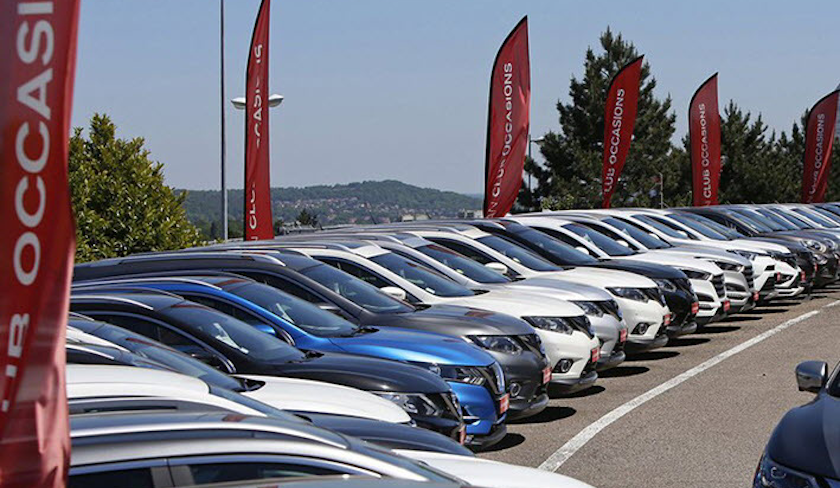
The legislative initiative relating to the importation of vehicles at the original rate caused, on Saturday November 29, 2025, a rare agitation in the aisles of Parliament. Under an electric atmosphere and intense disorder, the text nevertheless managed to cross the decisive stage of adoption.
This device, granted only once in a lifetime, aims to facilitate households’ access to a vehicle while strictly regulating the eligibility conditions.
According to the text, the advantage is reserved for the resident family, defined as the couple, their minor children or, in the event of divorce or death, the person assuming the capacity of head of the family. The vehicle acquired must not exceed eight years of age.
The amendment sets reduced taxation for low-displacement thermal cars: 10% consumption duty for diesel engines up to 1700 cm³ and petrol engines up to 1400 cm³, accompanied by VAT limited to 7%. Electric and hybrid vehicles as well as those made in Tunisia are exempt from consumer duties.
The text also introduces income conditions: gross income must not exceed ten times the SMIG for an individual and fourteen times the SMIG for a couple. In addition, the transfer of the vehicle is prohibited during the first five years, a mandatory mention must appear on the registration document.
The amendment also prohibits the accumulation of two tax advantages linked to the purchase of cars and requires that at least 10% of the annual total of authorized imports be reserved for beneficiaries of this regime.
The system mobilizes several financial mechanisms, notably the donation procedure for Tunisians abroad, the tourist allowance and the authorization to purchase foreign currency for the acquisition of the vehicle.
The tourist allowance is, remember, capped at the equivalent of 6,000 dinars in foreign currencies per person and per calendar year. However, according to the latest statistics published by La Centrale, the average price of used vehicles in France has fallen, in 2025, below the threshold of 20,000 euros. The same dynamic is true for 100% electric models, while hybrids record a drop in their average price below 30,000 euros.
At the same time, an exhaustive analysis of the European second-hand market, conducted by the Joint Research Center (JRC) of the European Commission, establishes that the majority of vehicles traded within the European Union are between eight and fifteen years old. The study further notes that older diesel models remain predominant, particularly in Central and Eastern European countries, where they continue to constitute the essential basis of the vehicle fleet.
The implementation of the legislative initiative will, according to the adopted text, be ensured jointly by the Ministries of Finance and Commerce, within a maximum period of six months following the entry into force of the law.
Complete requests must receive a written response within three months, and the beneficiary will have two years to complete the purchase after obtaining final agreement, failing which they will have to submit a new request.
This text was presented by its promoters as a relief measure intended to support Tunisians whose purchasing power has been deeply eroded under the combined effect of persistent inflation, the depreciation of the dinar and the obvious deterioration of public transport services.
For its defenders, the initiative is intended to be a pragmatic response to a pressing socio-economic reality: offering households the possibility of access to a vehicle at a more affordable cost, in a context where daily mobility is becoming increasingly precarious and where the financial pressure on families is reaching a critical threshold.
However, despite these stated intentions and the social scope of this initiative, the Ministry of Finance considered that the system remained, as it stands, inapplicable. The supervisory authority expressed serious reservations, both on a legal level and on a macroeconomic level, stressing that the measure contravened the regulatory framework governing foreign exchange, threatened the already fragile balance of foreign currency reserves and risked causing serious collateral effects, in particular on the balance of payments and on the structure of the national automobile fleet.
Speaking before the vote in Parliament, Finance Minister Michket Slama Khaldi noted that the legal framework currently in force in no way allows Tunisian individuals to freely import vehicles. Such an operation remains strictly regulated by a dense set of regulatory texts, dominated by foreign exchange legislation, the provisions of which are imposed with absolute rigor.
In this regard, she insisted on the imperative need to preserve national foreign currency reserves, strategic capital in an economic context marked by acute fragility and persistent tensions on the balance of payments.
If she recognized that “ the intention of the text is, in its essence, perfectly laudable », the minister nevertheless wanted to underline the structural and financial limits of its implementation. “ It’s a great proposition… but at what price? », she asked, opening up a range of fundamental questions: the feasibility of import mechanisms, the financing methods, the foreseeable impact on macroeconomic balances, as well as the real capacity of the State to absorb the costs incurred.
« How will we mobilize the necessary foreign exchange, and how will we provide it? “, she continued, recalling that, in her role as manager of public finances, she had to favor the allocation of foreign currency resources to vital imports: energy, cereals, subsidized products.
Also, diverting part of these limited reserves to finance the acquisition of vehicles seems, she said, difficult to justify in view of national priorities.
The minister also warned of the risks of a massive importation of used vehicles, both from the point of view of maintenance – likely to generate high costs for households – and the environmental impact, fearing an additional increase in an already aging and polluting vehicle fleet.
It finally concluded, unequivocally, that the proposal, as it stood, could not be considered as “ applicable », implicitly calling for a thorough review of the system to ensure its economic coherence and financial sustainability.

NJ