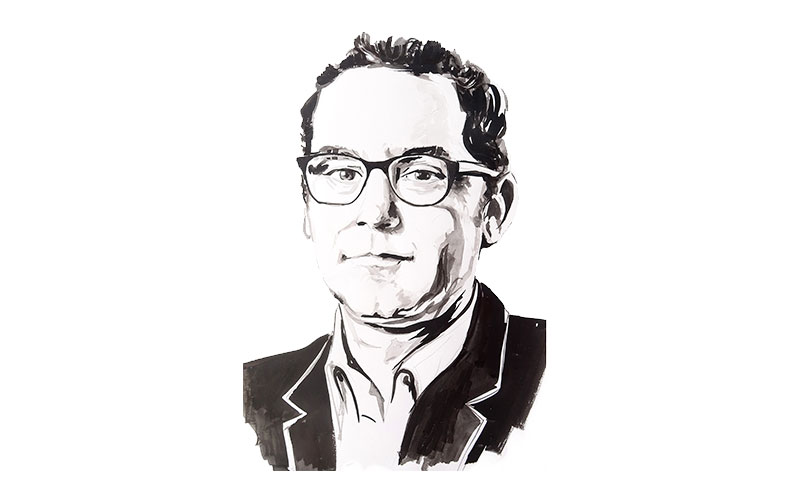
Kaïs Saïed is preparing to become a master in diversion. The major demonstrations of October 21 and 31 greatly disturbed the head of state. Having no concrete solution to offer to the tens of thousands of demonstrators in the most polluted city in the country, the regime is doing everything to ensure that the anger does not contaminate other regions. He stresses, he becomes agitated and multiplies spectacular actions so that we talk about everything except Gabès.
In just two weeks, there have been at least three actions: acceleration of the appeal trial of the conspiracy against the State – lawyers and defendants informed only 72 hours before the trial -, suspension of two of the most legendary and active associations in the country, the FTDES and the ATFD and a third association, the one which publishes the online newspaper Nawaat, then announcement of the trial of Ahmed Souab, one of the last public figures arrested, but one of the first to be judged.
At the same time, power is getting angry to the point of sinking into the abject. He no longer relies on his social media henchmen to insult the opposition: it is now the pundits of the public press who are doing it.
All this excitement reflects a state of unprecedented panic at the top of the state. A tense power, without horizon, which falls back on repression as the only response to protest.
Flight forward
Despite the absolute concentration of power, Kaïs Saïed has resolved nothing in six years in Carthage, including four of totalitarian power. Obviously, discontent rises. Obviously, he gets carried away. And when we get carried away, we make mistakes.
The insults on Facebook and in state media are a symptom of this feverishness. But Kaïs Saïed doesn’t just get agitated: he rushes headlong into a headlong rush.
Friday October 31, 2025, the trial of Ahmed Souab, a major figure in the Tunisian legal world, was held. Former magistrate, lawyer, human rights activist, he appeared for a misinterpreted metaphorical gesture: that of the magistrate who “ the knife at the throat ».
A harmless gesture, which would have gone unnoticed elsewhere, anywhere in the world. Not in Tunisia by Kaïs Saïed.
Supporters of the regime saw it as a terrorist threat. The prosecution reacted quickly: immediate arrest, express trial. In seven minutes, the court expedited the procedure.
The President, present, refused to allow the trial to be held by videoconference without the press or the public. In vain. The court sentenced Ahmed Souab to five years in prison and three years of administrative supervision, without pleading.
From magistrate to symbol
The case made the rounds in the national and international media.
Those who knew Ahmed Souab are revolted; those who were unaware of it wonder about the man who frightens the regime in this way. In a few days, he changed his stature: from an honest magistrate, he became a political prisoner.
He had the legitimacy of the word and the career. He now holds that of the injustice suffered.
By condemning him, the regime committed a strategic error: it canonized Ahmed Souab.
Exactly like the French colonist by imprisoning Bourguiba, Kaïs Saïed offered his opponent the prestige of the victim and the stature of the hero.
Sun Tzu, the forgotten lesson
Since the Gabès demonstrations, Kaïs Saïed has been stepping up his efforts. The air becomes unbreathable.
Commenting on this drift in his column today on the Maghreb, Zyed Krichen, the last of the Mohicans of Tunisian journalism, recalled a rule taken from Sun Tzu’s The Art of War: ” You must always leave an exit door for the enemy. »
It’s a lesson in universal strategy: a cornered opponent is a dangerous opponent. The one who feels hopeless has nothing left to lose and ends up fighting until the end.
Kaïs Saïed knows neither Sun Tzu nor the Art of War. His references are Zaqafouna and Al-Farazdaq.
Sun Tzu not only said how to win a war, but above all how to avoid losing one. Kaïs Saïed fights even when there is no longer an enemy.
However, The Art of War should be taught in all Tunisian high schools to prepare future generations to master the war of life.
Five years in prison is the mandate of a president
By believing he was creating a diversion to quell Gabès’ anger, Kaïs Saïed committed a major political mistake.
He transformed Ahmed Souab — a simple civil activist — into a presidential political prisoner.
In spite of himself, he put on the costume once worn by Nelson Mandela and Habib Bourguiba.
And the most surprising thing is that this costume suits him perfectly.
Unlike most Tunisian politicians, Ahmed Souab is consensual. We appreciate it on the right and the left.
He is anti-Islamist, but has never advocated their exclusion.
He speaks ordinary Tunisian, naturally, without manipulative jargon with hackneyed literary Arabic. He knows how to listen, he knows how to convince.
Even his sporting tastes are unifying. He likes Stade Tunisien, a team that everyone looks favorably on. And who doesn’t love baklawa!
Better yet, Ahmed Souab is a political virgin. He has never displayed partisan colors, nor joined a party or a government. And when he was arrested in April, he sparked the biggest show of support seen for a public figure in years.
Bourguiba, the return
By wanting to divert attention from Gabès, Kaïs Saïed did the opposite.
In his haste, he multiplied strategic errors, those that Sun Tzu had already denounced twenty-five centuries ago: “ Never fight in anger. »
Like the French colonist by imprisoning Bourguiba, like Ben Ali by imprisoning the Islamists, Kaïs Saïed offered glory to his enemies.
Power thought it neutralized a man, it gave birth to a symbol. He wanted to gag a figure, he made a presidential candidate. He wanted to humiliate him, he raised him. He wanted to silence him, he made him heard even internationally.
He wanted to create a diversion; he Bourguibized Ahmed Souab.