Published
Reading time: 3min – video: 4min
:quality(50)/2025/12/02/huile-d-olive-1-692f14f5ab356792604647.jpg)
4 minutes
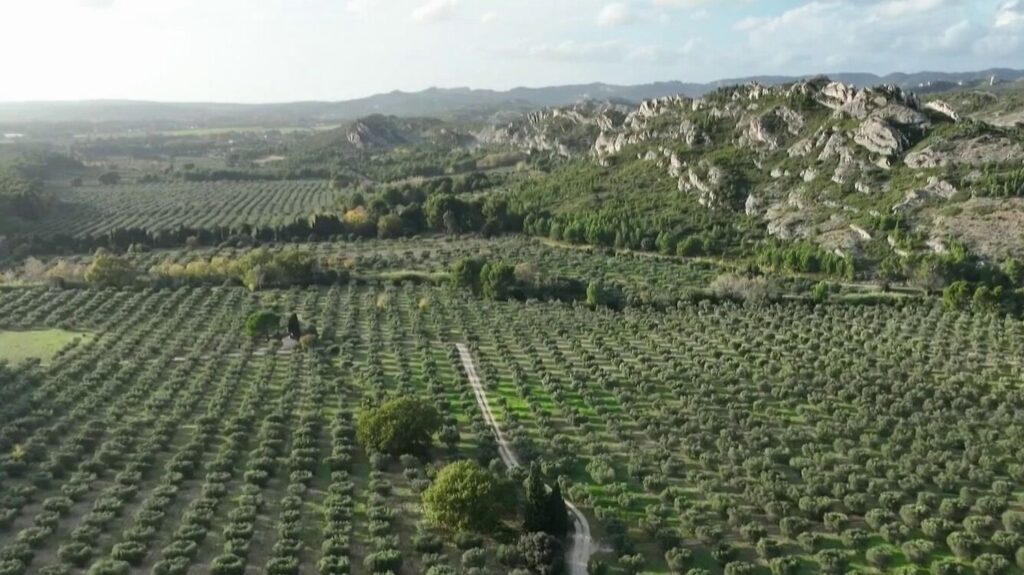
The Alpilles, a mountain range in the heart of Provence, are known for their olive trees. France TV teams followed olive oil producers in Mouriès, the leading olive-growing commune in France.
This text corresponds to part of the transcription of the report above. Click on the video to watch it in full.
Its green fleece extends as far as the eye can see. Here he is the king of trees. On this land, the olive tree has flourished for millennia. In Mouriès, in the 12 hectares of his olive grove, William Révoil finishes his harvest. “It will be a rather average year, not a very great year in terms of quantity, but in any case, the olives are beautiful.” declares the oliver. Since 2016, they have been cultivating the four varieties of olives recognized by the Vallée des Baux-de-Provence protected designation of origin: Salonenque, Grossane, Aglandau or even the Verdale of Bouches-du-Rhône. “We are using healthy olives which have been able to mature slowly and therefore which will be able to produce good oil.” indicates William Révoil. The day ends after having collected around 30 kilos of olives.
To transform them into oil, William Reveils the door of his olives to the mill of his village. Mouriès, first commune in the heart of France. On average, its harvest produces 2000 liters of oil per year. The olives are weighed and washed in turn. Crushed whole, then kneaded for 15 to 30 minutes. The resulting paste is decanted before being put through the centrifuge. The green gold of the Alpilles appears under the permanent control of François-Xavier Arnihac. Since 2021, he has been the guarantor of the quality of the olive oil at the mill. “An oil that is well balanced, there must be aromas, bitterness and spiciness, all balanced. The main thing for me is not to leave any flaws” estimates the master miller of the Moulin Coopératif de Mouriès.
As always, Cathia Schwab and François-Xavier Arnihac taste the day’s production. In front of them, two different oils. Green fruitiness on one side and maturity or black fruitiness on the other, which make Alpilles olive oil famous. A way of doing things, inherited from the past.
“We recreate what was done before in the old mills. People brought the olives, they stored them in the attics. And as the mills moved slower than the harvest, the olives waited. It’s a fruit loaded with water, so it ferments and heats up. And when it went through the mill, it looked like this. That makes two really different oils with the same olives.” describes François-Xavier Arnihac. A particularity that this family from the north of France and on vacation in the Alpilles was unaware of. “Already, just the smell, you can smell the tapenade. There you go, we feel the sweetness, we really smell the black olive, the tapenade. So far, I’m not disappointed. It’s really delicious and I think we’ll leave with a bottle or two“, declares the couple. The green gold of the Alpilles, this living ancestral heritage. The production of the Beaux-de-Provence valley represents 10% of French production. It is the largest in the country.