Somalia’s president calls for unity at an emergency joint session of parliament, which declares the Israeli move ‘null and void’.
Somalia’s president has condemned Israel’s recognition of the breakaway region of Somaliland as a “naked invasion”, warning that the move threatens to ignite separatist movements elsewhere.
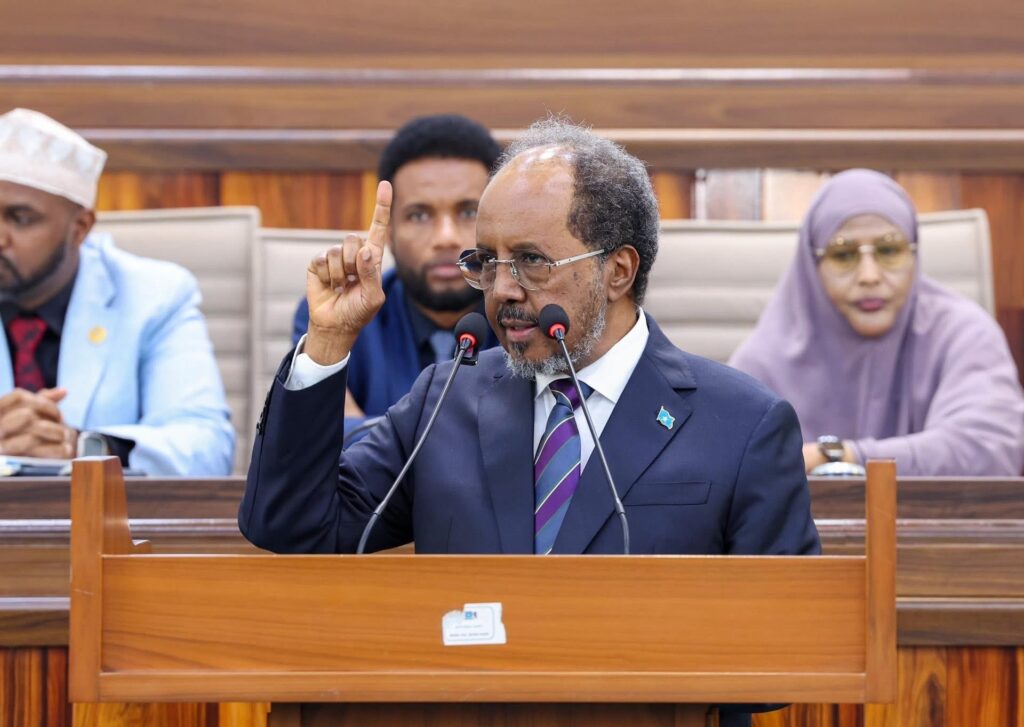
Addressing an emergency joint session of parliament on Sunday, President Hassan Sheikh Mohamud said Israeli Prime Minister Benjamin Netanyahu has committed the “greatest abuse” of Somalia’s sovereignty in the nation’s history and referred to Israel as an “enemy”.
Recommended Stories
list of 4 itemsend of list
“I am encouraging the Somali people to be calm and to defend the unity and the independence of our country, which is facing this naked invasion,” he said.
Lawmakers unanimously passed a resolution declaring Israel’s recognition as “null and void” although the measure is largely symbolic given that Somalia has not controlled Somaliland since it declared independence in 1991, which Somalia has never accepted.
The resolution warns that individuals or institutions violating Somalia’s sovereignty will face legal consequences under the country’s penal code and international law. It directed the government to take up the matter with the United Nations, African Union, Arab League and other regional bodies.
‘Existential threat’
Netanyahu on Friday announced that Israel had established full diplomatic relations with Somaliland, describing the move as being in the spirit of the United States-brokered Abraham Accords, which normalised ties between Israel and several Arab countries.
The announcement made Israel the first UN member state to formally recognise the self-declared state, which has sought international acceptance for more than three decades without success.
Mohamud accused Netanyahu of trying to import Middle Eastern conflicts into Somalia and promised his country would not allow its territory to be used as a military base to attack other nations.
He urged Somalis to set aside “tribal and regional rivalries” to confront what he described as an “existential threat” to the country’s unity.
“We need to combine our wisdom and strengths to defend our existence and sovereignty,” the president said, calling on Somaliland’s leaders to enter meaningful negotiations to preserve Somalia’s territorial integrity.
Somali Prime Minister Hamza Barre told Al Jazeera Arabic that Israel was “searching for a foothold in the Horn of Africa” and called on it to recognise and accept a Palestinian state instead.
Defending the Israeli move, Somaliland President Abdirahman Mohamed Abdullahi, known locally as Cirro, said on Friday that Somaliland’s recognition “is not a threat, not an act of hostility” to neighbouring countries.
He said his nation is “deeply rooted in Islamic values of moderation, justice and coexistence” and does not represent an alignment against any Islamic nation or community.
Meanwhile, the Israeli decision sparked immediate international backlash.
A joint statement issued on Saturday by 21 Arab and African countries and the Organisation of Islamic Cooperation condemned the recognition as a grave violation of international law and the UN Charter.
In a statement, the Palestinian Ministry of Foreign Affairs expressed support for Somalia.
Regional leaders – including the presidents of Kenya, Uganda, Tanzania and Djibouti – held phone calls with Mohamud to reaffirm support for Somalia’s territorial integrity. Eritrea separately called on China to take action at the UN Security Council, drawing parallels to the Taiwan issue.
The European Union issued a statement calling for respect for Somalia’s sovereignty but stopped short of condemning the move. It urged authorities in Mogadishu and Hargeisa to engage in dialogue.
Israel’s move to recognise Somaliland came during a more than two-year genocidal war in Gaza, in which more than 70,000 Palestinians have been killed.
Israel is currently being investigated by the International Court of Justice over allegations of genocide, and Netanyahu is the subject of an arrest warrant issued by the International Criminal Court on accusations of war crimes and crimes against humanity.
Somaliland broke away from Somalia in 1991 after a civil war under military ruler Siad Barre. The self-declared republic controls part of northwestern Somalia and has its own constitution, currency and flag. It claims the territory of the former British Somaliland protectorate, but its eastern regions remain under the control of rival administrations loyal to Somalia.
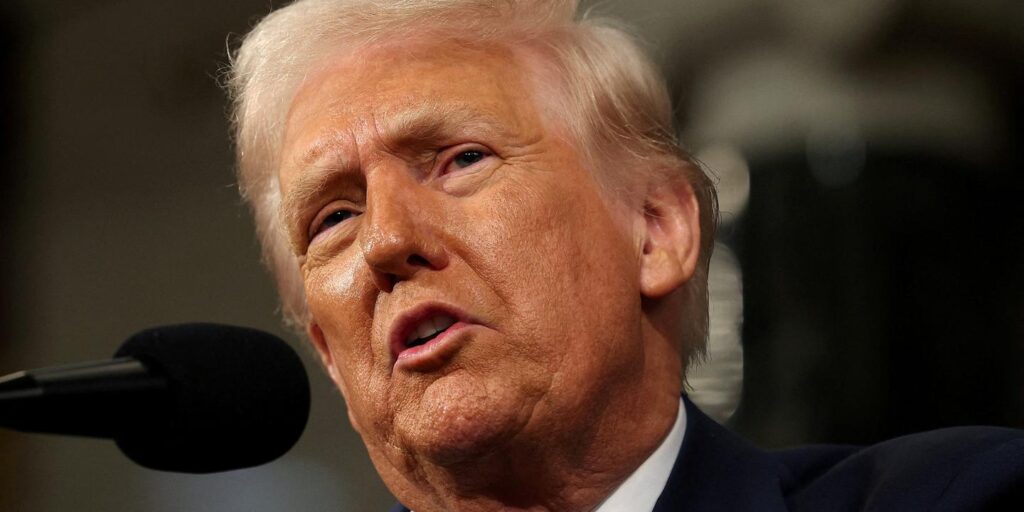
Asked by the New York Post on Friday if he would recognise Somaliland, US President Donald Trump replied “no” although he added that the matter remained under study. “Does anyone know what Somaliland is, really?” Trump asked.
The UN Security Council is expected to discuss Israel’s recognition of Somaliland on Monday.