Published
Reading time: 2min – video: 2min
:quality(50)/2025/11/03/budget-les-riches-vont-ils-payer-plus-69084b06a9d39032620366.jpg)
2 minutes
In recent weeks, measures to make the biggest fortunes pay have multiplied in the National Assembly. While the budget debate resumes Monday in the National Assembly and the Zucman tax has been abandoned, will the rich really be taxed more?
This text corresponds to part of the transcription of the report above. Click on the video to watch it in full.
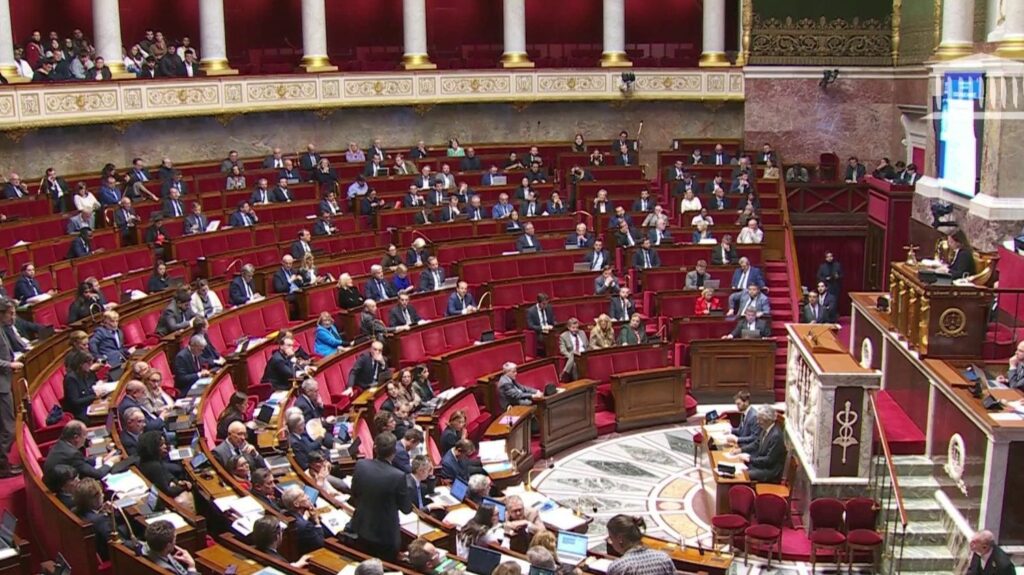
A week of budget in the Assembly and at the heart of the often tense debates, the taxation of higher incomes. Friday was a surprise: the RN voted with Modem and the socialists. It transforms the tax on real estate wealth into a tax on unproductive wealth. On paper, more goods are taxed: real estate, but also jewelry, yachts, cryptocurrency, works of art and even life insurance in euros. Which makes the government tick. “The government’s position has not changed. We are obviously against it because it taxes long-term savings“, government spokesperson Maud Bregeon declared on RTL.
How much will this tax bring in? It’s complex, particularly because of the exemptions. The main residence, up to 1 million euros, is now completely excluded from the calculation. The RN is struggling to evaluate performance this morning. “Between 3 and 5 billion. I’m basing this on our tax on financial wealth which we had estimated at 3 billion. Perhaps this one will bring in a little less,” Sébastien Chenu, vice-president of the party, tried to explain.
The costing is still underway at the Ministry of Finance. The tax rate also changes and becomes fixed, single, at 1%, which could benefit the wealthiest. “We have a rather particular form of redistribution where the rich can be taxed more than before. And on the other hand, a certain number of the richest, even the ultra-rich, could be taxed less because the rate which will now apply is lower than what existed before, that is to say we would go from 1.5% to 1%.“, specifies Mathieu Plane, deputy director of theFrench Observatory of Economic Conditions (OFCE).
A new tax which is added to other measures: the contribution on high incomes maintained, the taxation of multinationals, voted on, or the new tax on holding companies. But nothing is definitive. Matignon recalls that all texts can evolve in the Senate, then in final reading in the Assembly, by the end of the year.