Despite the end of a very advantageous regulation system which expires on December 31, the Ministry of the Economy assures that “invoice prices should be stable” for the next two years.
:quality(50)/2023/07/06/64a68815cd1a7_placeholder-36b69ec8.png)
Published
Reading time: 2min
:quality(50)/2025/12/22/000-88ue79j-6949455d52752827368138.jpg)
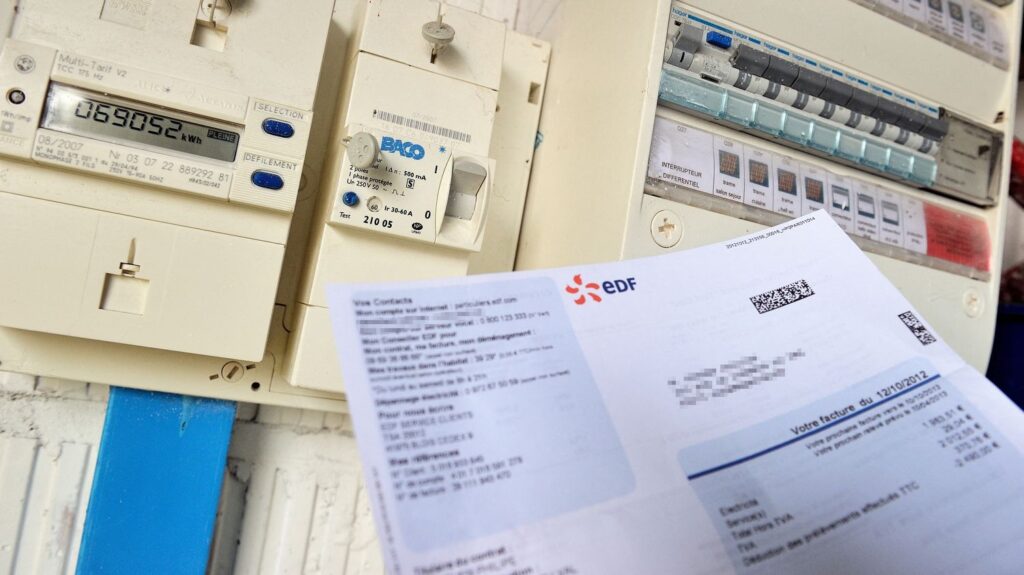
What to expect for your next electricity bills? The government anticipates a “stability” tariffs for most households for the years 2026 and 2027, despite the end of a very advantageous regulation system which ends on December 31, 2025. From January 1, “invoice prices should be stable at least in 2026 and 2027”for most French households, “in view of the low prices of French carbon-free energy on the wholesale markets”explains the Ministry of the Economy to AFP.
Concretely, for these two years, “the transition to the new mechanism will have no impact” on regulated electricity sales prices, which concern some 19.75 million subscribers, or 56% of residential customers. Since 2011, a system called Arenh has required the historic operator EDF to cede around a quarter of its annual nuclear production to very energy-intensive manufacturers and to its competing alternative suppliers at a very advantageous price, 42 euros per MWh, to meet European competition requirements.
This system expires on December 31, and will be replaced by a new system designed, according to the Ministry of the Economy, as a “compromise between consumer protection” and the needs of“investment in the energy system of the future and in particular in the nuclear program for EDF”. This mechanism allows EDF to sell its nuclear production more freely, depending on market prices. But, if its income exceeds certain thresholds, it will be taxed to be redistributed to all consumers, individuals and businesses: this is the universal nuclear payment (UNV), a system which has attracted criticism for its lack of readability.
This mechanism will come “reduce consumers’ bills if prices were to exceed” two progressive thresholds planned at 78 euros per MWh then 110 euros per MWh, “by taking EDF” on its revenues which exceed these ceilings, explains the ministry. However, given the current prices of French electricity on wholesale markets – around 50 euros per MWh – consumers should not benefit from this redistribution from 2026, as the Energy Regulatory Commission had already anticipated in September.