Published
Reading time: 5min – video: 9min
:quality(50)/2025/11/06/knfkndkj-690c569bab120377613941.jpg)
9min
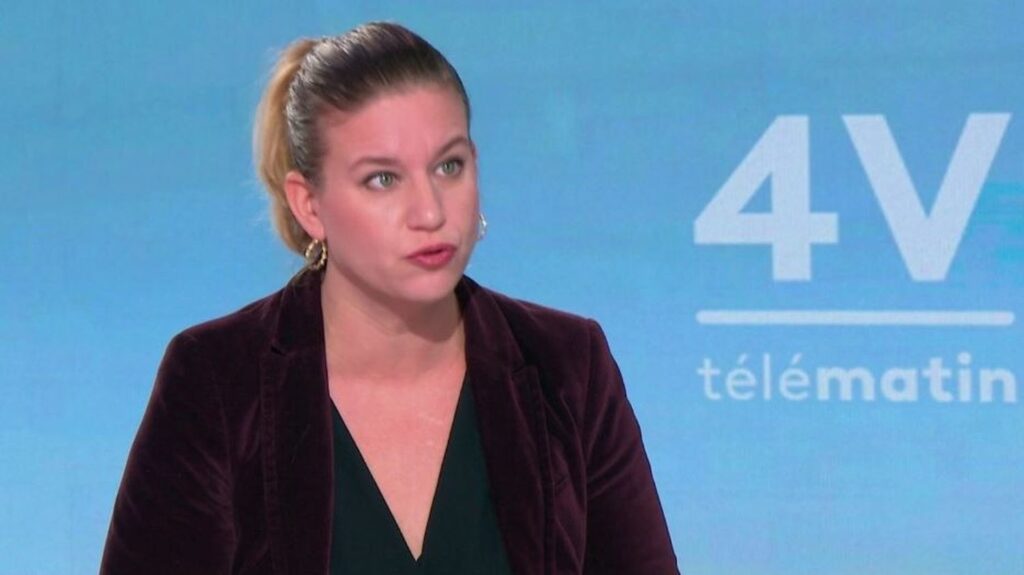
Mathilde Panot, president of the LFI group at the National Assembly, was the guest of 4 Vérités, Thursday November 6, to return to police violence during demonstrations against megabasins in Sainte-Soline, comment on the measures envisaged in relation to online sales platforms like Shein, and discuss the 2026 budget under discussion in the Assembly.
This text corresponds to the transcription of part of the interview above. Click on the video to watch the interview in full.
Gilles Bornstein: Our colleagues from Release and of Mediapart reveal particularly shocking comments made by certain police officers responsible for maintaining order during demonstrations against megabasins in Sainte-Soline. The Minister of the Interior has just announced that he condemned these “unacceptable” comments and that he deplored “clearly non-regulatory actions”. He called for an investigation to be opened. If these words are confirmed, here they are. Are you asking for sanctions?
Mathilde Panot: Obviously. We are even calling for the establishment of a parliamentary commission of inquiry in the National Assembly. And above all, we want to understand why the IGGN, which had these videos for a long time, did not take legal action. Among the comments made, we hear for example: “I can’t count the men we’ve put out, a real treat.” Or again: “We have to kill them, we’re going to kill them.” This is extremely serious. I remind you that, on Sainte-Soline as on other environmentalist demonstrations, the government has already been singled out on multiple occasions, notably by the UN special rapporteur on environmental defenders. The central question is that of the political orders given to the gendarmerie: how did we end up with so many wounded, 4,000 grenades fired, non-regulatory actions, and even an ambulance prevented from intervening.
Gilles Bornstein: However, do you welcome the rapid and unambiguous reaction of the Minister of the Interior?
Mathilde Panot: You know, the demonstration dates from 2023. It’s about time. And fortunately the journalists did their work of verification, I congratulate them. Without them, there would probably have been no investigation.
I now hope that this affair will mark a turning point, because we are facing a deep problem of authoritarianism: the President of the Republic is showing himself more and more violent towards the demonstrators.
I remind you: protesting is a fundamental right. It must be respected.
Gilles Bornstein: The government also asked the courts to suspend the Shein platform and, in another procedure, to block the site. Do you support these decisions?
Mathilde Panot: These decisions are above all the result of citizen and association mobilizations. It took extremely serious products such as child pornography dolls or the sale of category A weapons for the government to finally take up the subject. But that is not enough. We have already experienced a similar case with the Wish platform, delisted for a year without this preventing the arrival of Shein or Temu. The question is: how do we put an end to a rotten system? We are talking about VAT fraud estimated at 5 billion euros per year. Forced labor of children, women, Uyghurs. A major ecological disaster, with, at Shein, seven out of ten products not meeting European standards.
This system has destroyed 350,000 jobs in fifty years in textile manufacturing, and 65,000 in clothing sales.
This is why we proposed a law against fast fashiondiscussed in the Assembly and the Senate. It aims to ban advertising for these brands and to establish a bonus-malus system: clothing produced in ecologically and socially irresponsible conditions would be taxed, in order to make virtuous production more affordable and to relocate the textile industry to France, with real jobs.
Gilles Bornstein: But is the suspension a good thing, despite everything?
Mathilde Panot: This is a first step, but very insufficient. We must send a clear message, particularly to small traders who respect the law and struggle to survive in the face of these platforms. The signal must be clear: in France, the law applies to everyone.
This text corresponds to the transcription of part of the interview above. Click on the video to watch the interview in full.