To finance Social Security, deputies are considering increasing the CSG on capital income, which would make certain investments a little less advantageous. A measure which takes place in a context where French savings are reaching record levels, a reflection of both prudence and concern about the future.
:quality(50)/2024/03/04/fanny-guinochet-65e60267ebb86457775765.png)
Published
Reading time: 3min
:quality(50)/2025/11/07/lecornuassemblee-690dac3965803532961679.jpg)
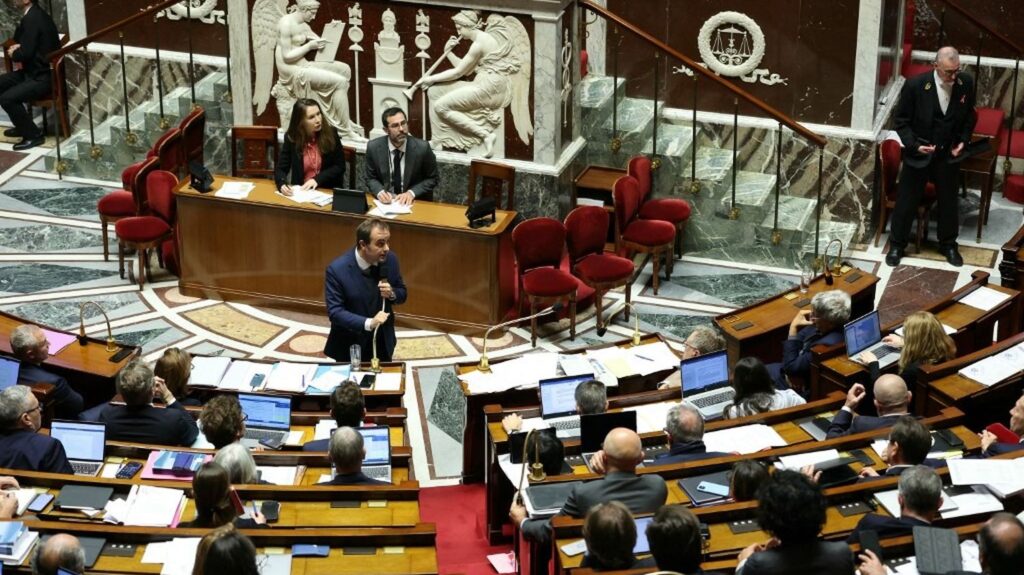
The deputies, in search of money, turned to the savings of the French. Proof of this is that during this first week of November, they voted, on the proposal of the Socialists, for an increase of 1.4 points in the rate of the CSG (generalized social contribution) on capital income. These include investments such as life insurance or capitalization contracts. If the budget is adopted, the CSG on these products will increase from 9.2% to 10.6%. Holding this type of investment will therefore be a little less advantageous than today.
Be careful, this does not mean that the State will dig into your savings or your nest egg. The goal is to find new resources. The deputies hope to release between 2.5 and 3 billion euros for Social Security, in particular to finance the suspension of the pension reform. This increase in the CSG does not concern the Livret A, the Livret Jeune or the Livret d’épargne populaire. For these measures to apply, the Senate must still examine them and the budget must be voted on. We are still far from it.
The French are nevertheless real ants. They haven’t saved this much in half a century. Our overall savings rate reaches 19% of disposable income. In September, for example, the French deposited 15 billion euros on their life insurance, an increase of 20% over one year. According to France Assureurs, at the end of August, the total outstanding amount of life insurance exceeded 2,000 billion euros. Livret A books and other regulated booklets are also very well completed.
In total, in 2025, savings in France will reach 6,000 billion euros. This windfall arouses desire, even if it above all reflects the concerns of households about the future. We put aside for fear of a hard blow, a tax increase or a drop in income.
This saving does not completely penalize the economy. Part of it is finance. Money from Livret A, for example, managed by the Caisse des Dépôts, makes it possible to finance the construction of social housing. But, according to many economists, it would be desirable for a greater share of these savings to be directed towards innovation, businesses and SMEs, in order to further support growth and risk-taking.
However, in a highly indebted country, such significant savings reassure the financial markets and the investors who lend us money, as well as the rating agencies. Which is not useless.