Borrowers to receive wage garnishment notices starting January 7, Department of Education confirms.

Published On 23 Dec 2025
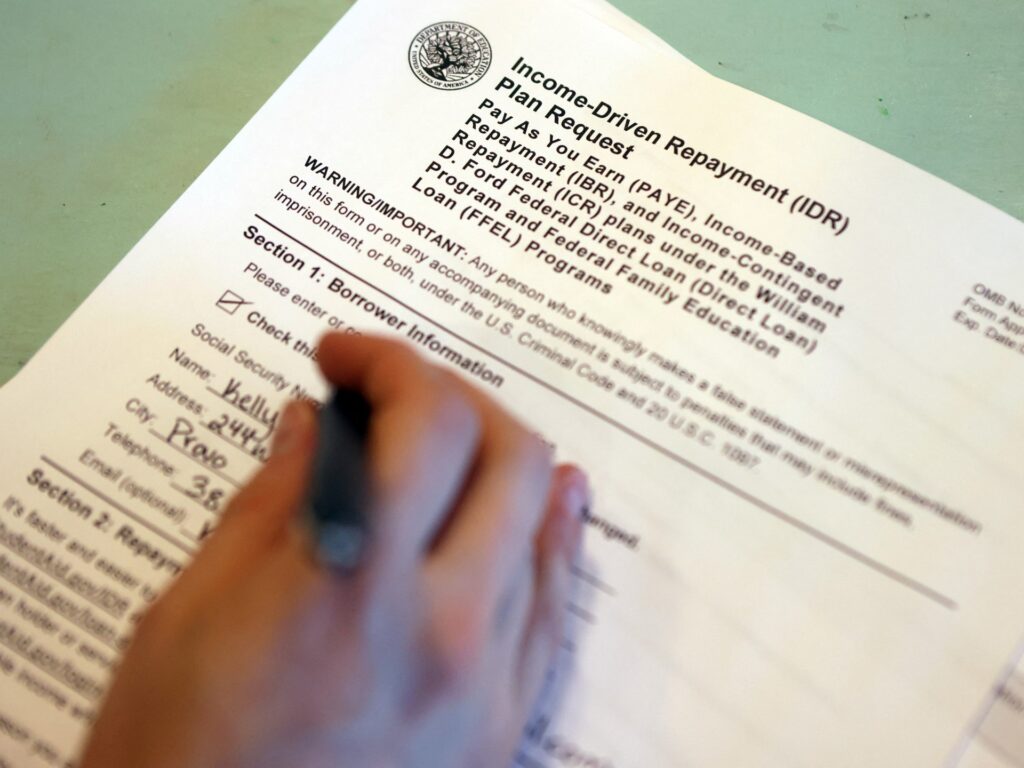
The administration of United States President Donald Trump says it will begin garnishing wages from some borrowers who have defaulted on their student loans, marking the first time the federal government has taken such action since the onset of the COVID-19 pandemic.
Affected borrowers will begin receiving notices on January 7, a Department of Education spokesperson told Al Jazeera on Tuesday.
Recommended Stories
list of 4 itemsend of list
The policy is expected to initially impact about 1,000 borrowers, and the number is to grow over time.
“The notices will increase in scale on a month-to-month basis,” the spokesperson said.
Al Jazeera asked the department for clarification on how borrowers were selected for the first round of garnishments, how many additional people may be affected and the rationale behind those decisions.
The agency did not clarify but said collections are “conducted only after student and parent borrowers have been provided sufficient notice and opportunity to repay their loans”.
Under federal law, the government may garnish up to 15 percent of a borrower’s take-home pay as long as the individual is left with at least 30 times the federal minimum wage per week. The federal minimum wage is currently $7.25 an hour, a rate that has remained unchanged since July 2009.
About one in six American adults holds student loan debt, which totals about $1.6 trillion. As of April, more than 5 million borrowers had not made a payment in at least a year, according to the Education Department.
The garnishments are planned as economic pressure mounts for many Americans amid rising prices and a cooling labour market. According to consulting firm Challenger, Gray & Christmas, more than 1.1 million people lost their jobs in 2025 as job growth slowed. Federal data also showed mixed employment trends in recent months with job losses reported in October followed by modest gains in November.
In the months of October and November, the unemployment rate increased to 4.6 percent, the highest since 2021, according to the US Department of Labor’s Bureau of Labor Statistics.
“Families are being forced to choose between paying their bills and putting food on the table. The Trump administration’s decision to begin garnishing wages takes even that meagre choice away from student loan borrowers who are living on the brink,” Julie Margetta Morgan, former deputy undersecretary at the Education Department under former President Joe Biden, told Al Jazeera.
“Instead of solving the affordability crisis that’s leaving Americans unable to pay their student loans, the president is further punishing families and forcing them to forgo the very basics.”
In addition to wages, the federal government has the authority to garnish income from tax refunds, Social Security benefits and certain disability payments.