Published
Reading time: 2min – video: 2min
:quality(50)/2025/12/22/video-10-6949a1f2410cd876567397.jpg)
2 minutes
After the explosion at a Seveso factory near Lyon (Rhône), Monday December 22, the safety standards of these installations raise questions. How many Seveso sites exist in France and why are the controls not enough to avoid such accidents?
This text corresponds to part of the transcription of the report above. Click on the video to watch it in full.
In 2016, a fire had already occurred in a Seveso factory near Lyon (Rhône) after a highly flammable liquid escaped from a barrel in a storage warehouse. An employee had died.
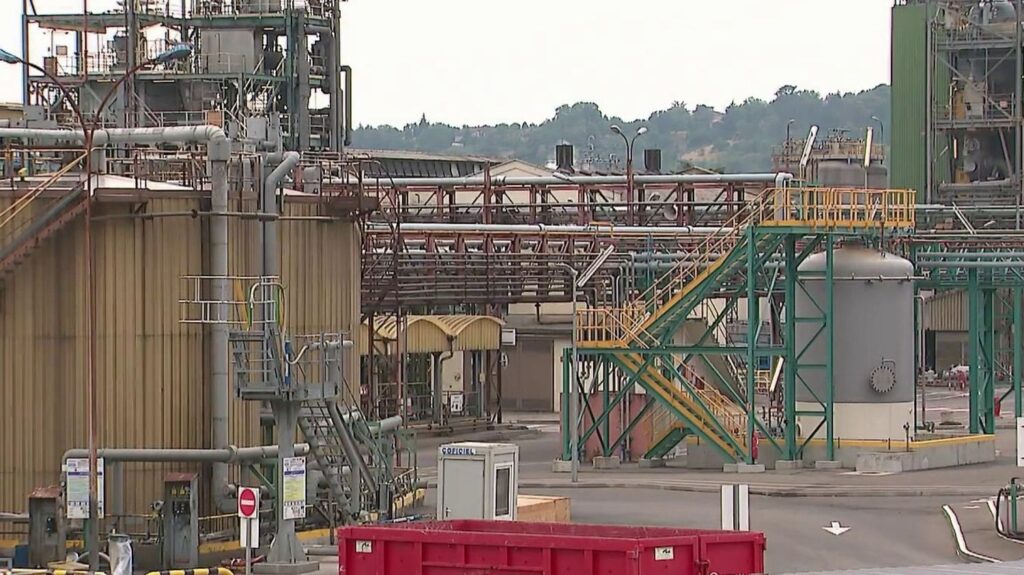
The factory is classified Seveso because it uses dangerous substances such as toxic gases, explosive or flammable products. In addition, it has been classified Seveso high threshold, which means that it uses very large quantities of dangerous substances, with a risk of major accident. “A Seveso site, high threshold, is checked every year, or even several times a year. However, the problem is that in France, we do not spend enough time on these sites. On average, four days for a Seveso file in France. When in Spain, we talk about 10 days and in Germany, 20 days”says Paul Poulain, industrial risks specialist.
Despite very strict safety rules, the proximity of Seveso classified businesses to homes has been a problem for a long time. It is estimated that the population living within one kilometer is 2.5 million people. For sites classified as high threshold, this would be 1.1 million people. “Whether it is the chemical valley, whether it is the Le Havre region or the Rouen region, these are regions where we know very well that there is a major industrial risk. Unfortunately, we have let our industrialization and our urbanization meet”notes Corinne Lepage, lawyer specializing in environmental law. France has 1,299 Seveso sites, including 702 at the high threshold.