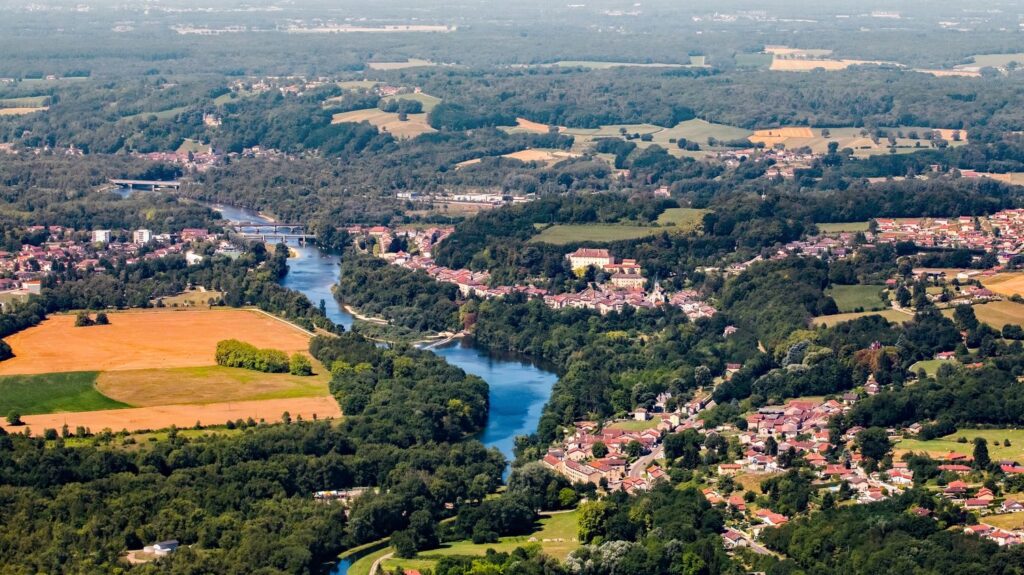
28% of companies with at least one employee are located in rural areas. Who are those who lead them? What were their motivations and do they experience rurality as an asset or a weakness? The Public Investment Bank has looked into the subject.

Published
Reading time: 2min
:quality(50)/2025/12/18/gettyimages-935649340-694405b0d569c036672080.jpg)
The questionnaire distributed last summer by the Public Investment Bank met with some success since more than 2,500 business leaders responded. This is the largest sample ever collected by Bpifrance as part of a study.
The respondents are business owners with at least 5 employees. Men, overwhelmingly. Half are located in towns, the other in municipalities where housing is dispersed, or even very dispersed. One in two is completely outside the catchment areas of medium-sized towns, large cities or metropolises.
First lesson: most of them have an emotional attachment to the territory where their business is located. 63% grew up there, never left or returned to settle there. 12% have family ties or studied there. 20% come from elsewhere, they arrived for a business opportunity or because the territory meets their needs.
When asked whether being located in rural areas is a strength or a weakness, the results are ambivalent.
3 out of 4 leaders judge the economic life of their territory to be stagnant or in decline. What is slowing down the development of their activity? They overwhelmingly cite recruitment difficulties and, in a small proportion, the lack of job opportunities and limited access to transport infrastructure.
These obstacles are partly offset by certain advantages: greater employee loyalty and therefore lower turnover. Reduced operating costs because real estate and land cost less. And the possibility of finding land more easily.
Ultimately, only 10% of these business leaders consider their location in rural areas a weakness. 45% believe, on the contrary, that it is a strength. The others respond neither.
Another lesson is that many business leaders in rural areas are active in local life. Nearly 7 out of 10 feel invested with territorial responsibility. This involves training young people and financial support for associations or projects.
More than half are also involved in associative activities, professional organizations, or some in local political life. Finally, 8 out of 10 managers mention a local spirit which pushes business leaders to talk to each other and lend a hand. Their feeling of loneliness is also much less pronounced than at the national level.